Can Guinea Pigs Eat Strawberries? Safe Portions
Can guinea pigs safely eat strawberries? Learn the safe portion size, frequency, vitamin C benefits, and digestive risks of strawberry fruit and leaves.
On this page
Seeing your guinea pig wheek enthusiastically at the sound of the refrigerator door opening is one of the joys of cavy ownership. When preparing a summer fruit salad, it is tempting to share a juicy red strawberry with your furry friend.
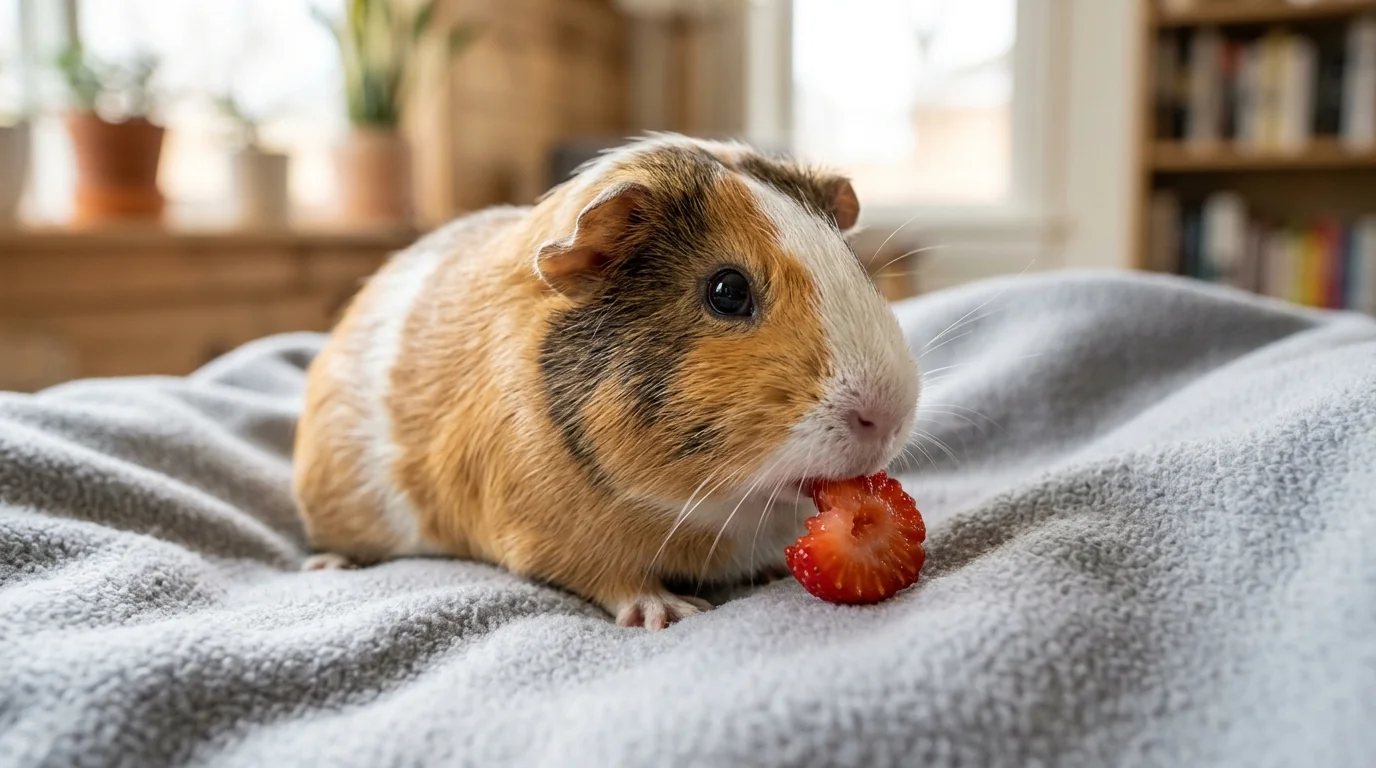
The short answer is yes, guinea pigs can eat strawberries safely! Strawberries offer a valuable boost of natural vitamin C. However, because a guinea pig’s digestive system evolved to digest fibrous, low-sugar grasses, strawberries must be fed strictly as an occasional treat rather than a daily staple.
Portion size matters: Strawberries are high in sugar
A safe strawberry portion for an adult guinea pig is one small slice (or half a small berry) once or twice a week. Excessive fruit sugar disrupts the delicate cavy cecum microflora, causing soft stool, bloat, and painful gas.
Nutritional benefits of strawberries for cavies
Unlike most mammals, guinea pigs cannot synthesize their own vitamin C (ascorbic acid) due to a genetic lack of the L-gulonolactone oxidase enzyme. Without dietary vitamin C, guinea pigs can develop scurvy within two to three weeks.
- Natural Vitamin C: 100 grams of fresh strawberries contain roughly 59 mg of vitamin C, which supports collagen production, joint health, and a resilient immune system.
- Hydration: With an 91% water content, strawberries provide a refreshing, hydrating snack during hot summer months.
- Antioxidants & Polyphenols: Anthocyanins (which give strawberries their bright red hue) help fight cellular oxidative stress.
For a comprehensive dietary overview of safe vs unsafe fresh produce, check our complete cavy guide on what can guinea pigs eat.
Risks of overfeeding sweet fruits
While non-toxic, excessive strawberry consumption poses several health concerns:
- Cecal dysbiosis and diarrhea: Cavies rely on specialized bacteria in their large cecum to ferment fibrous hay. Surges of simple fructose fuel pathogenic bacteria overgrowth, leading to painful intestinal gas or life-threatening watery diarrhea.
- Obesity: Guinea pigs have sedentary metabolic patterns. High-calorie sweet treats contribute to liver lipidosis and joint strain.
- Mouth sores (Cheilitis): The natural fruit acids in strawberries can cause painful lip cracks or crusty crusts around the mouth if fed too frequently.
- Bladder sludge risk: Strawberries contain moderate levels of calcium and oxalates. While lower than spinach or kale, feeding excess oxalates combined with high-calcium pellets can contribute to painful calcium carbonate bladder stones.
Can guinea pigs eat strawberry tops and leaves?
Surprisingly, the green leafy strawberry top (calyx) is actually healthier for guinea pigs than the red berry itself!
Strawberry tops are higher in beneficial roughage fiber and lower in simple sugars than the fruit flesh. Whenever you hull strawberries for your own kitchen recipes, wash the green tops thoroughly under cold water and offer them to your guinea pigs as a crunchy, fiber-rich salad garnish.
Guinea pig fruit feeding schedule
| Produce Item | Safe Portion | Frequency | Primary Benefit |
|---|---|---|---|
| Strawberry Fruit | 1/2 small berry | Once or twice weekly | Vitamin C, antioxidant boost |
| Strawberry Green Top | 1 to 2 green leafy tops | 2 to 3 times weekly | High fiber, low sugar |
| Bell Pepper (Capsicum) | 1/8 medium slice | Daily (Staple veg) | Highest cavy-safe daily vitamin C |
| Blueberries | 1 to 2 berries | Once weekly | Low sugar, brain-healthy flavonoids |
| Apple Slice | 1 thin sliver without seeds | Once weekly | Pectin fiber, hydration |
Ensure your companions live in an enriching, properly sized environment; explore our guinea pig cage size guide to give your cavies ample space to zoom and “popcorn” after treat time.
Learn more about companion care in our guinea pig care for beginners. And if your cavy makes excited noises when treat time arrives, decode the vocalizations in our guide on guinea pig sounds meaning.
Frequently asked questions
Can baby guinea pigs eat strawberries?+
Pups under six months old have very sensitive digestive tracts. It is best to wait until your guinea pig is at least 6 months old before introducing sugary fruits like strawberries, focusing earlier nutrition on Timothy hay, alfalfa, and bell peppers.
Can guinea pigs eat frozen, dried, or canned strawberries?+
No. Only feed fresh, raw strawberries. Canned strawberries contain added syrups and preservatives, dried strawberries are concentrated sugar bombs that stick to teeth, and frozen strawberries pose a choking risk and digestive shock.
Do strawberry seeds harm guinea pigs?+
No. Unlike apple or peach seeds which contain trace cyanide compounds, the tiny achenes (seeds) on the exterior of a strawberry are completely harmless, non-toxic, and safe for cavies to chew.
What should I do if my guinea pig gets diarrhea after eating fruit?+
Immediately stop feeding all fruits and fresh greens. Provide unlimited fresh Timothy hay and clean water to stabilize gut flora. If watery diarrhea or lethargy persists beyond 12 hours, consult an exotic veterinarian immediately.
How should I wash strawberries before giving them to my pet?+
Strawberries frequently retain pesticide residues on their delicate skins. Always wash strawberries thoroughly in cold running water or soak them in a mild vinegar-water bath, rinsing clean before slicing.
Sources & further reading
This article draws on guidance from these trusted organizations. Always consult your own veterinarian for advice specific to your pet.
Written by
Raghav DeedwaniyaFounder & Editor
Raghav Deedwaniya is the founder and editor of Petifys, and the author behind its pet care content. I’m a lifelong pet owner, not a veterinarian — I’ve been around dogs since childhood, and that hands-on experience is what got me into writing about responsible pet ownership. At Petifys I create practical, easy-to-understand guides, each one carefully researched using trusted sources such as the AVMA, ASPCA and International Cat Care. My aim is to help you make informed everyday decisions — but for anything involving your pet’s health, always consult a qualified veterinarian who can examine your animal in person.
Disclosure: Some links in this article are affiliate links. If you buy through them we may earn a small commission at no extra cost to you. We only recommend products we believe in. Learn more.