How to Litter Train a Rabbit (Fast & Easy Guide)
Learn how to litter train a rabbit quickly and easily. Step-by-step box setup, safe litter choices, hay rack placement, and accident troubleshooting.
On this page
- The impact of spaying and neutering
- Rabbit-safe supplies: What to use and avoid
- Step-by-step rabbit litter box setup
- Step 1: Choose a large, shallow cat litter pan
- Step 2: Layer the base with rabbit-safe litter
- Step 3: Add a generous mound of fresh hay
- The 4-step litter training procedure
- Step 1: Start in a confined space
- Step 2: Observe their chosen bathroom corner
- Step 3: Relocate stray pellets and wipe urine
- Step 4: Expand roaming freedom gradually
One of the most delightful surprises for new bunny owners is discovering that domestic rabbits can be litter trained just as reliably as cats. Because rabbits are prey animals with strong territorial and sanitary instincts, they naturally choose specific corners of their territory to relieve themselves.
By understanding their anatomy and pairing their natural grazing habits with the right litter setup, you can give your rabbit the run of your bunny-proofed home without worrying about soiled carpets or rogue pellets.
The secret rabbit formula: Hay inside the litter box
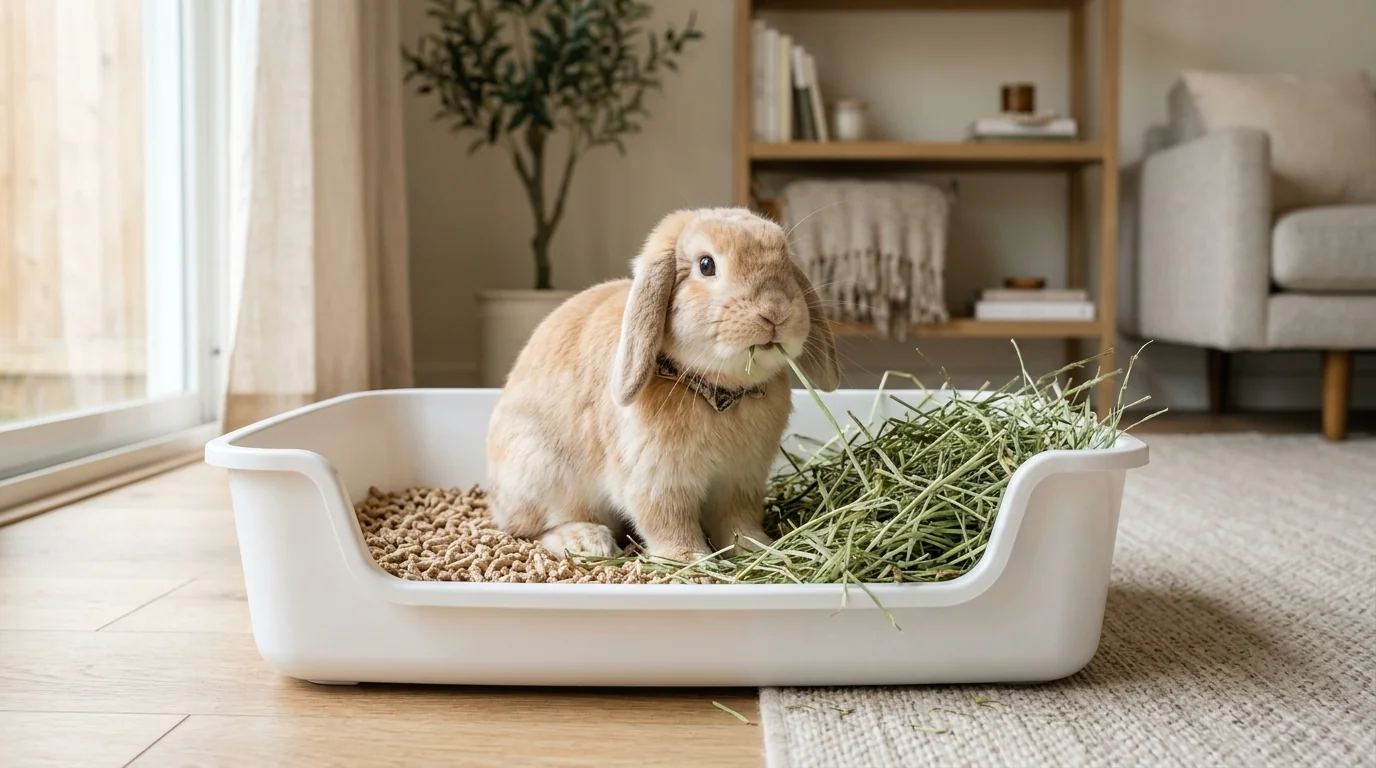
Rabbits have an active gastrointestinal tract and love to “poop and chew” simultaneously. Placing a generous pile of fresh, aromatic Timothy hay directly above or inside one end of the litter box guarantees your bunny will spend time inside the box and develop flawless habits.
The impact of spaying and neutering
Before spending hours training, evaluate your rabbit’s reproductive status. Intact rabbits reach sexual maturity between 4 to 6 months of age. Driven by surging hormones, they begin spraying urine on vertical walls and scattering territorial scent-poops throughout the room.
Spaying or neutering reduces territorial marking by over 90%, calms behavioral frustration, and prevents fatal reproductive cancers in females. Litter training an altered rabbit takes days, while training an unaltered rabbit can feel like an uphill battle.
Rabbit-safe supplies: What to use and avoid
Rabbits ingest small particles of whatever substrate sits beneath their paws. Choosing the wrong litter can cause fatal gastrointestinal stasis or respiratory irritation.
| Litter Material | Safety Status | Why Use / Why Avoid |
|---|---|---|
| Compressed Wood Pellets | Highly Recommended | Inexpensive, incredible odor control, safe when non-aromatic |
| Recycled Paper Pellets (e.g. Yesterday’s News) | Highly Recommended | Highly absorbent, dust-free, non-toxic if sampled |
| Shredded Cardboard / Crinkle Paper | Acceptable | Safe, but low odor absorption; requires daily replacement |
| Clay / Clumping Cat Litter | DANGEROUS | Ingested clay clumps in the gut, causing fatal GI blockage |
| Cedar or Pine Wood Shavings | DANGEROUS | Releases aromatic phenols that damage rabbit liver and lungs |
Step-by-step rabbit litter box setup
Step 1: Choose a large, shallow cat litter pan
Skip the tiny triangular corner pans sold in pet store rodent sections; they are far too small for an adult bunny to turn around in comfortably. Purchase a standard open cat litter box or a shallow under-bed storage container.
Step 2: Layer the base with rabbit-safe litter
Cover the bottom of the tray with 1 inch of compressed paper or kiln-dried pine pellets. You do not need deep litter; shallow absorption prevents waste and odor buildup.
Step 3: Add a generous mound of fresh hay
Add a thick handful of fresh Timothy or orchard grass hay on one side of the tray, or hang a hay rack directly over that end. To learn more about proper rabbit nutrition, review our guide on what do rabbits eat.
The 4-step litter training procedure
Step 1: Start in a confined space
Never give an untrained rabbit free roam of a multi-room house. Start them in a spacious exercise pen (x-pen) or small bunny-proofed room with their litter box. Once they demonstrate 100% box accuracy in this space, gradually expand their territory.
Step 2: Observe their chosen bathroom corner
Rabbits pick their favorite corner, not the other way around. If your rabbit repeatedly eliminates in the back-right corner of their pen, simply move their litter box to that exact spot. Working with their natural preference brings instant cooperation.
Step 3: Relocate stray pellets and wipe urine
In the early days, pick up stray fecal pellets with a tissue and deposit them inside the litter box. Wipe up urine spills with white vinegar and water, then place the damp paper towel inside the litter box so the scent anchor remains inside the pan. White vinegar neutralizes lingering odors and stops re-marking on flooring.
Step 4: Expand roaming freedom gradually
After your rabbit uses the litter box consistently for one week, open the pen to allow room access. If accidents occur, temporarily reduce roaming space for a few days.
Understanding your rabbit’s body language and vocal cues makes communication effortless; read our breakdown of why is my rabbit thumping to understand how stress affects bathroom behavior. If you care for other herbivores, learn whether can rabbits and guinea pigs live together before planning shared play areas. For full housing and care guidelines, consult our rabbit care beginners guide.
Frequently asked questions
How long does it take to litter train a rabbit?+
A neutered or spayed adult rabbit often learns within 3 to 7 days if hay is placed directly inside the pan. Young bunnies under 5 months or unneutered rabbits take longer due to hormonal territory marking.
Why does my rabbit poop right next to the litter box?+
If droppings are clustered directly outside the box, the lip of the pan may be too high, the box may be too small for them to comfortably enter, or the pan is too dirty. Rabbits refuse to step into soiled pans with wet bottoms.
Can I use baking soda in my rabbit's litter box?+
No. Do not sprinkle raw baking soda in rabbit litter boxes as ingestion can cause severe electrolyte imbalances and respiratory distress. Stick to compressed paper pellets and frequent cleanings.
Do rabbits need multiple litter boxes in a house?+
Yes. If your rabbit has free-roam access across multiple rooms or levels of your house, provide at least one litter box per room or floor to prevent accidents when they are far from home base.
Why does my rabbit kick litter everywhere?+
Rabbits dig as a natural burrowing instinct. To stop litter kicking, switch to a litter box with a protective high-sided scatter guard or place a plastic grid over the pellet layer underneath the hay.
Sources & further reading
This article draws on guidance from these trusted organizations. Always consult your own veterinarian for advice specific to your pet.
Written by
Raghav DeedwaniyaFounder & Editor
Raghav Deedwaniya is the founder and editor of Petifys, and the author behind its pet care content. I’m a lifelong pet owner, not a veterinarian — I’ve been around dogs since childhood, and that hands-on experience is what got me into writing about responsible pet ownership. At Petifys I create practical, easy-to-understand guides, each one carefully researched using trusted sources such as the AVMA, ASPCA and International Cat Care. My aim is to help you make informed everyday decisions — but for anything involving your pet’s health, always consult a qualified veterinarian who can examine your animal in person.
Disclosure: Some links in this article are affiliate links. If you buy through them we may earn a small commission at no extra cost to you. We only recommend products we believe in. Learn more.