Are Indoor Cats Happy? How to Keep Them Thriving
Can indoor cats live happy, fulfilling lives? Explore feline mental stimulation, vertical space, play routines, and safety benefits of keeping cats inside.
On this page
- The outdoor risks: why keeping cats inside saves lives
- Do indoor cats get bored or depressed?
- 5 pillars to make an indoor cat truly thrive
- 1. Maximize vertical territory
- 2. Practice the “Hunt, Catch, Kill, Eat, Groom, Sleep” cycle
- 3. Provide “Cat TV” and sensory enrichment
- 4. Ditch the boring food bowl
- 5. Safe outdoor exploration: Catios and harness walks
The debate between keeping cats strictly indoors versus granting outdoor access is one of the most passionate in pet care. Well-meaning owners frequently wonder: are indoor cats happy, or are they bored, frustrated, and missing out on their true nature?
Veterinary consensus and animal welfare organizations overwhelmingly agree that indoor cats live significantly longer, safer lives. An indoor cat, however, cannot thrive in a barren environment without mental engagement. True feline happiness indoors depends entirely on whether we provide environmental enrichment that satisfies their natural predatory instincts.
The lifespan reality
Strictly indoor cats live an average of 12 to 17 years, whereas outdoor cats average only 2 to 5 years due to traffic accidents, predator attacks, infectious diseases (FIV, FeLV), toxins, and severe weather.
The outdoor risks: why keeping cats inside saves lives
Allowing cats to roam unsupervised outdoors exposes them to serious hazards:
- Vehicular trauma: Vehicle collisions are the leading cause of sudden death in outdoor domestic cats.
- Infectious diseases: Feline Leukemia Virus (FeLV), Feline Immunodeficiency Virus (FIV), rabies, and parasites pass rapidly through outdoor fighting and contact with feral colonies.
- Predators and poisons: Coyotes, foxes, raptors, rodenticides, and toxic garden chemicals (such as lilies and antifreeze) pose constant threats.
- Wildlife impact: Free-roaming domestic cats kill billions of native songbirds, reptiles, and small mammals globally each year, disrupting delicate local ecosystems.
Do indoor cats get bored or depressed?
Cats are energetic predators with sharp sensory systems. If an indoor cat is confined to four bare walls with only an open bowl of kibble and a dirty litter box, they can experience chronic stress, lethargy, and depression.
Common signs of an under-stimulated indoor cat include:
- Excessive over-grooming leading to bald patches.
- Destructive chewing or fabric scratching.
- Compulsive vocalizing (if this happens after dark, review our guide on why is my cat meowing at night).
- Lethargy and obesity from chronic inactivity.
When owners enrich the indoor environment, cats experience the thrill of the hunt, territorial ownership, and deep security without any of the outdoor dangers.
5 pillars to make an indoor cat truly thrive
1. Maximize vertical territory
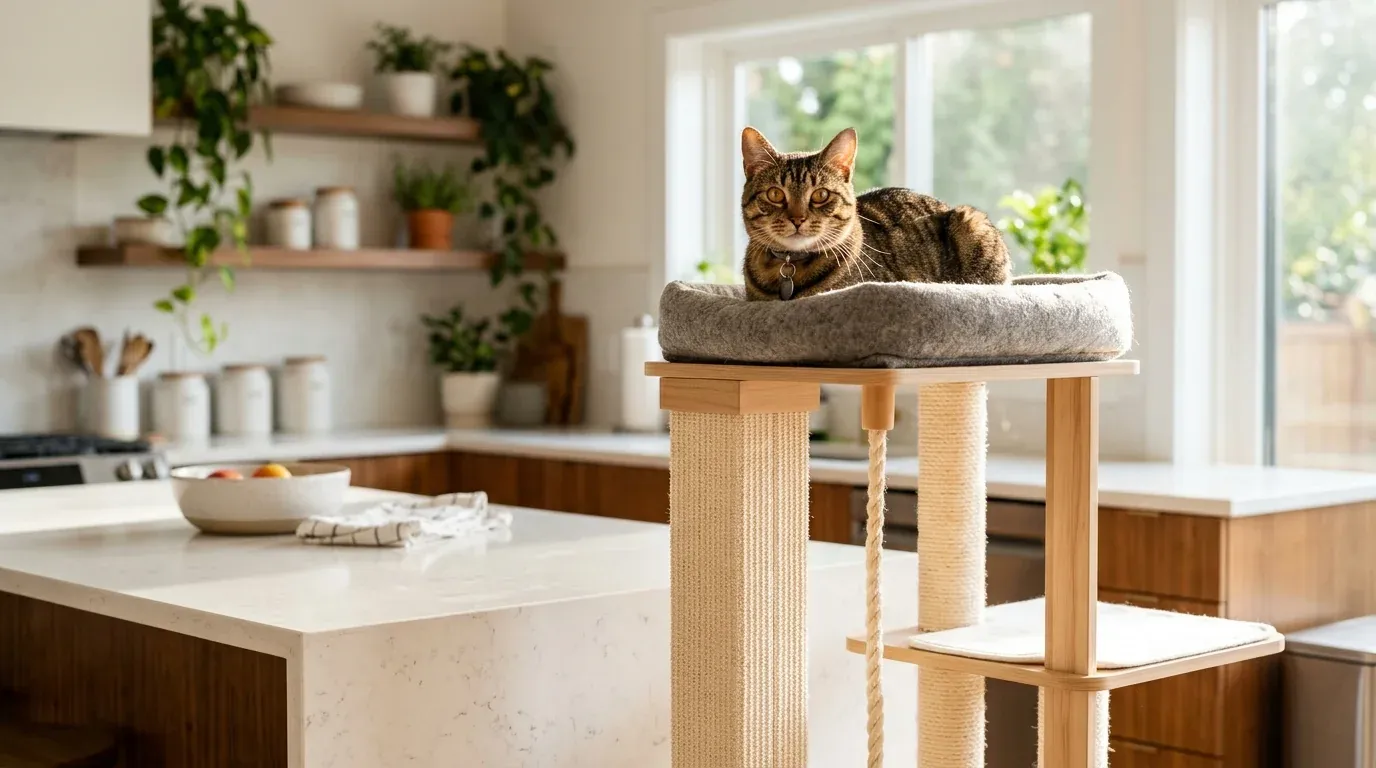
Cats live in three dimensions. In the wild, height provides security, vantage points for scouting prey, and escape from ground threats.
- Install wall-mounted cat shelves and climbing steps.
- Provide sturdy, tall cat trees near sunny windows.
- Clear tops of bookcases and wardrobes to create high perches. In a multi-pet home, vertical territory gives cats a secure retreat away from energetic family dogs. If you are balancing both species, explore our practical comparison in dog vs cat which pet should you get.
2. Practice the “Hunt, Catch, Kill, Eat, Groom, Sleep” cycle
Cats are crepuscular hunters hardwired for short bursts of intense activity followed by deep rest. Laser pointers alone leave cats frustrated because there is no tactile prize to capture.
- Engage your cat in two 10-to-15-minute daily interactive play sessions using wand toys (like Da Bird).
- Move the lure like real prey: darting around corners, hiding behind cushions, fluttering in the air.
- Allow your cat to physically capture the toy at the end of the game.
- Immediately follow the play session with a meal or protein treat. This satisfies their natural hunting sequence and promotes contented sleep. To balance daily calories, check our guidelines on how much to feed a cat.
3. Provide “Cat TV” and sensory enrichment
Sight and smell provide rich mental stimulation:
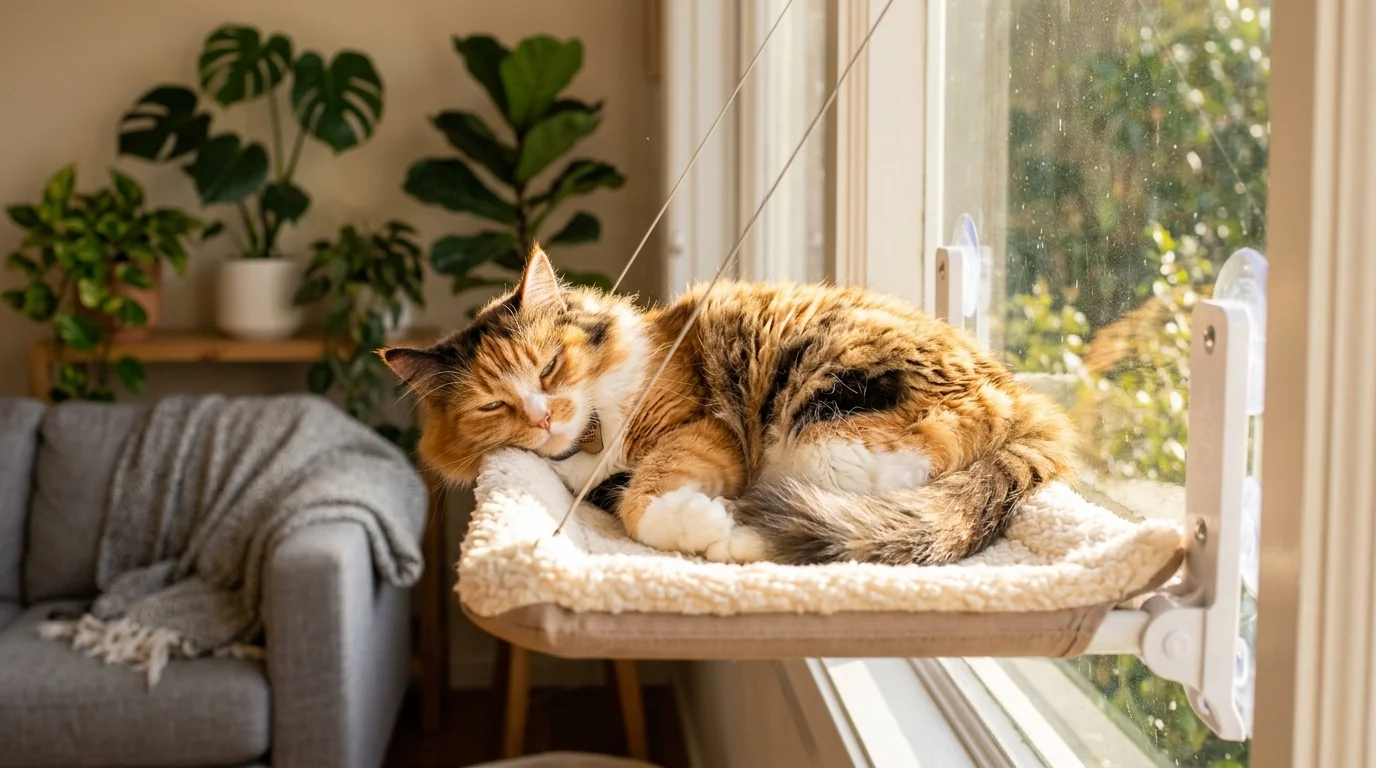
- Place a bird feeder outside a secure window where your cat perches.
- Leave safe YouTube bird and rodent videos playing during work hours.
- Offer sensory sniff boxes filled with dried autumn leaves, paper bags with handles removed, or dried silvervine sticks.
4. Ditch the boring food bowl
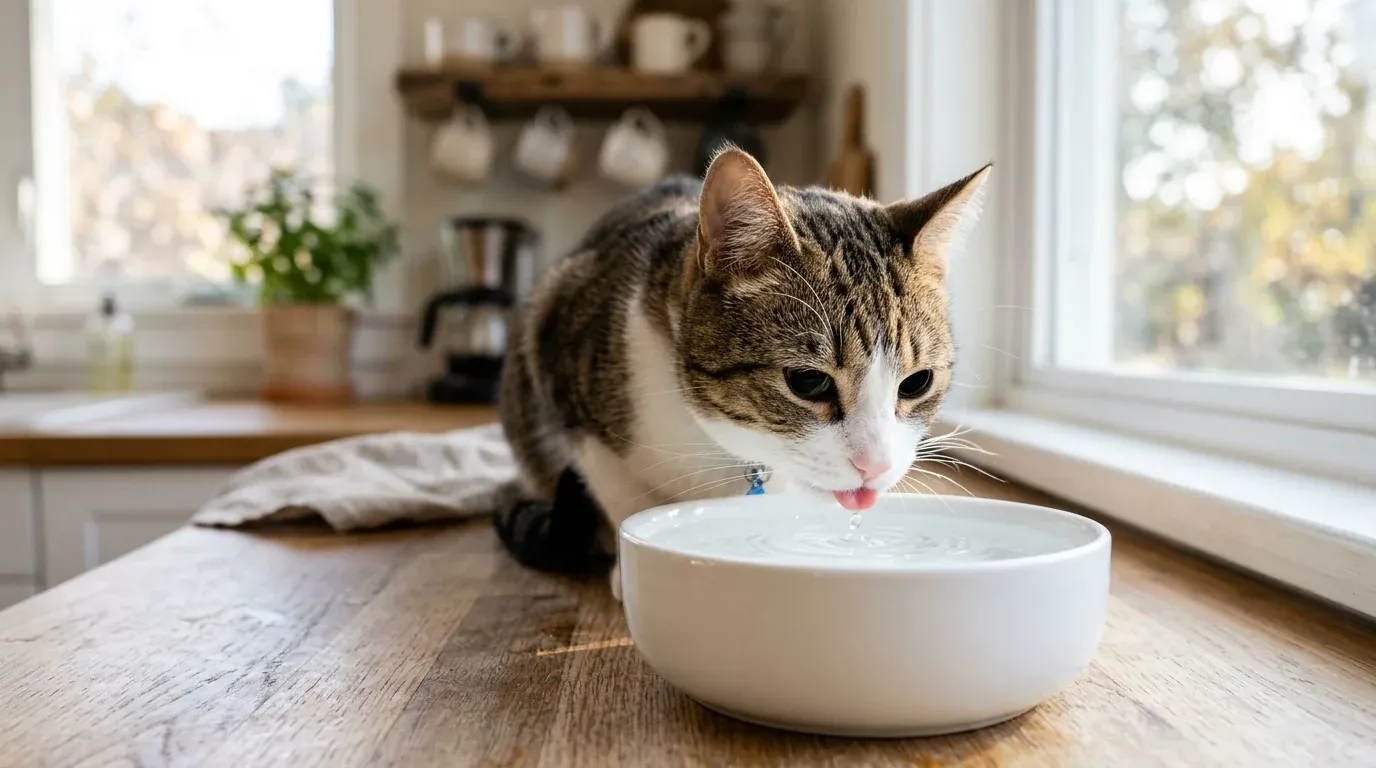
In nature, cats spend up to 50% of their waking hours foraging and hunting small meals. Free-feeding from an overflowing bowl breeds inactivity and weight gain.
- Use puzzle feeder balls that require rolling to dispense dry food.
- Hide small portions of food in paper cups or lick mats around the house to simulate foraging.
- Transition to timed meals to keep their metabolism and curiosity engaged.
5. Safe outdoor exploration: Catios and harness walks
You do not have to choose strictly between four walls and dangerous roaming. Compromise safely:
- Catios: Build or purchase an enclosed outdoor cat patio (window box or patio tent) allowing fresh air and sunshine without escape risk.
- Harness training: Many cats take naturally to soft mesh harnesses and lightweight leashes when trained patiently with treats from kittenhood.
| Living Condition | Average Lifespan | Primary Benefit | Key Owner Responsibility |
|---|---|---|---|
| Strictly Indoor | 12 to 17 years | Safety, disease prevention, longevity | Daily enrichment, play, vertical space |
| Indoor with Catio/Leash | 12 to 17 years | Outdoor sights/scents with zero risk | Supervised outings, secure containment |
| Free-Roaming Outdoor | 2 to 5 years | Natural hunting freedom | High vet bills, early mortality risk |
An indoor cat with an attentive owner who provides vertical perches, daily wand play, and affectionate companionship lives a deeply contented, happy life. For those bringing home a new companion, our first-time cat owner guide covers everything from litter setups to safe home preparation.
Frequently asked questions
Do indoor cats get lonely when left alone all day?+
Cats are more social than commonly believed. While most adult cats tolerate a standard 8-hour workday easily, long stretches of isolation can cause boredom. Leaving interactive puzzle toys, window perches, and ambient sounds helps, and dedicating focused play time before leaving and upon return keeps them fulfilled.
Should I get a second cat to keep my indoor cat company?+
Not necessarily. While bonded sibling pairs do wonderfully together, adult cats are naturally territorial. Introducing an unfamiliar adult cat incorrectly can increase stress, territorial spraying, and friction rather than alleviating loneliness.
How can I tell if my indoor cat is genuinely happy?+
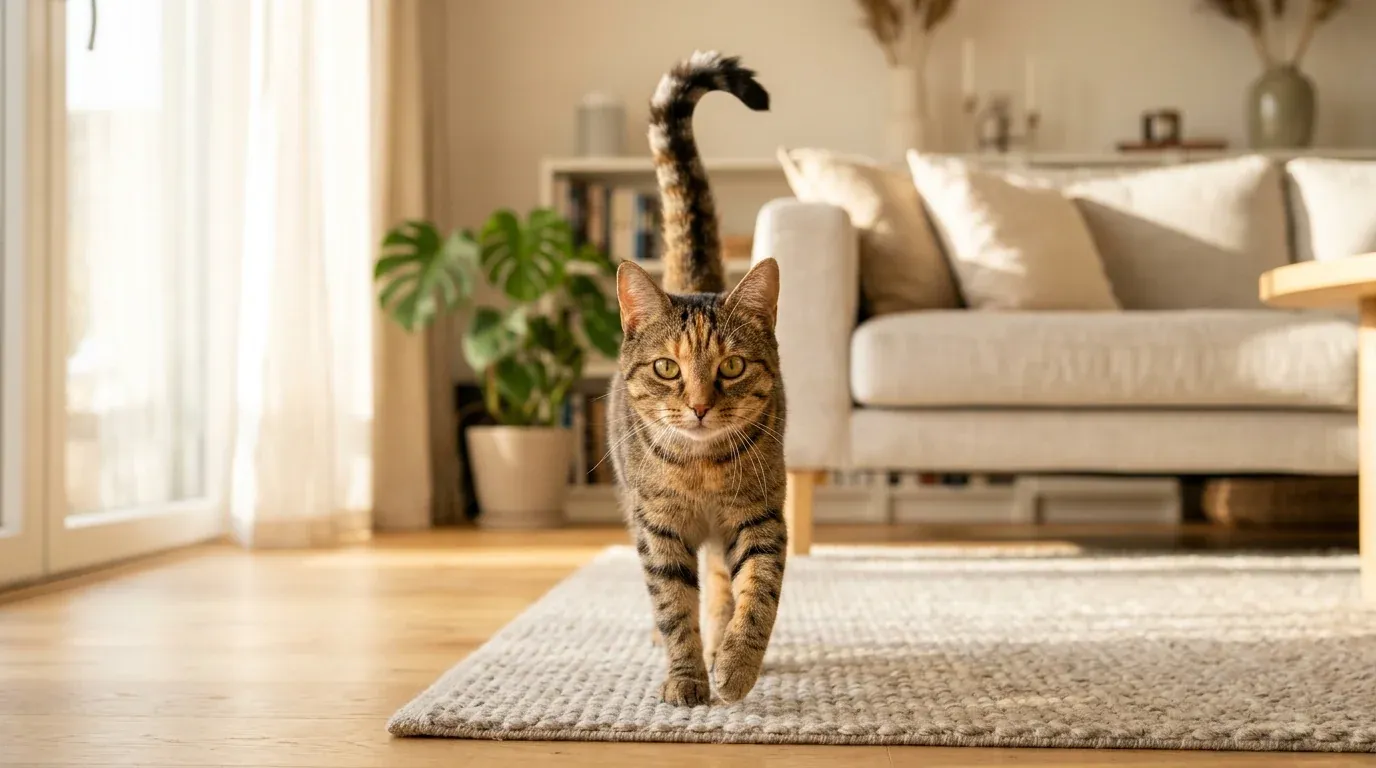
A happy indoor cat displays relaxed body language, holds their tail upright with a gentle curve at the tip, purrs during social interaction, initiates play, grooms regularly, eats enthusiastically, and engages in calm loafing or sprawling postures.
Is it cruel to keep a former outdoor cat inside?+
No. Transitioning a former stray or outdoor cat indoors requires an adjustment period (usually 2 to 4 weeks of window gazing and door meowing), but with abundant vertical climbing towers, scratching posts, and wand play, former outdoor cats settle in and thrive.
Do indoor cats need vaccinations and parasite prevention?+
Yes. Indoor cats still need core vaccinations (such as rabies and FVRCP) because viruses can enter on your shoes and clothing, and insects like mosquitoes carry heartworm while fleas easily hitchhike into homes.
Sources & further reading
This article draws on guidance from these trusted organizations. Always consult your own veterinarian for advice specific to your pet.
Written by
Raghav DeedwaniyaFounder & Editor
Raghav Deedwaniya is the founder and editor of Petifys, and the author behind its pet care content. I’m a lifelong pet owner, not a veterinarian — I’ve been around dogs since childhood, and that hands-on experience is what got me into writing about responsible pet ownership. At Petifys I create practical, easy-to-understand guides, each one carefully researched using trusted sources such as the AVMA, ASPCA and International Cat Care. My aim is to help you make informed everyday decisions — but for anything involving your pet’s health, always consult a qualified veterinarian who can examine your animal in person.
Disclosure: Some links in this article are affiliate links. If you buy through them we may earn a small commission at no extra cost to you. We only recommend products we believe in. Learn more.