Why Is My Cat Drinking So Much Water? 7 Causes
Noticing your cat drinking more water or visiting the water bowl frequently? Discover 7 common causes of feline polydipsia, symptoms, and vet advice.
On this page
- How much water should a cat drink daily?
- 7 medical causes of excessive drinking in cats
- 1. Chronic Kidney Disease (CKD)
- 2. Feline Diabetes Mellitus
- 3. Hyperthyroidism
- 4. Urinary Tract Infections (UTI) and Bladder Stones
- 5. Liver Disease (Hepatic Insufficiency)
- 6. Dietary shifts or salty treats
- 7. Medication side effects
- What to monitor and write down before the vet visit
Cats evolved from North African wildcats (Felis lybica), desert-dwelling predators whose bodies were adapted to obtain nearly all their hydration directly from the prey they caught. Because of this ancestry, domestic felines have a notoriously low thirst drive. A healthy cat rarely spends minutes gulping down water from a bowl.
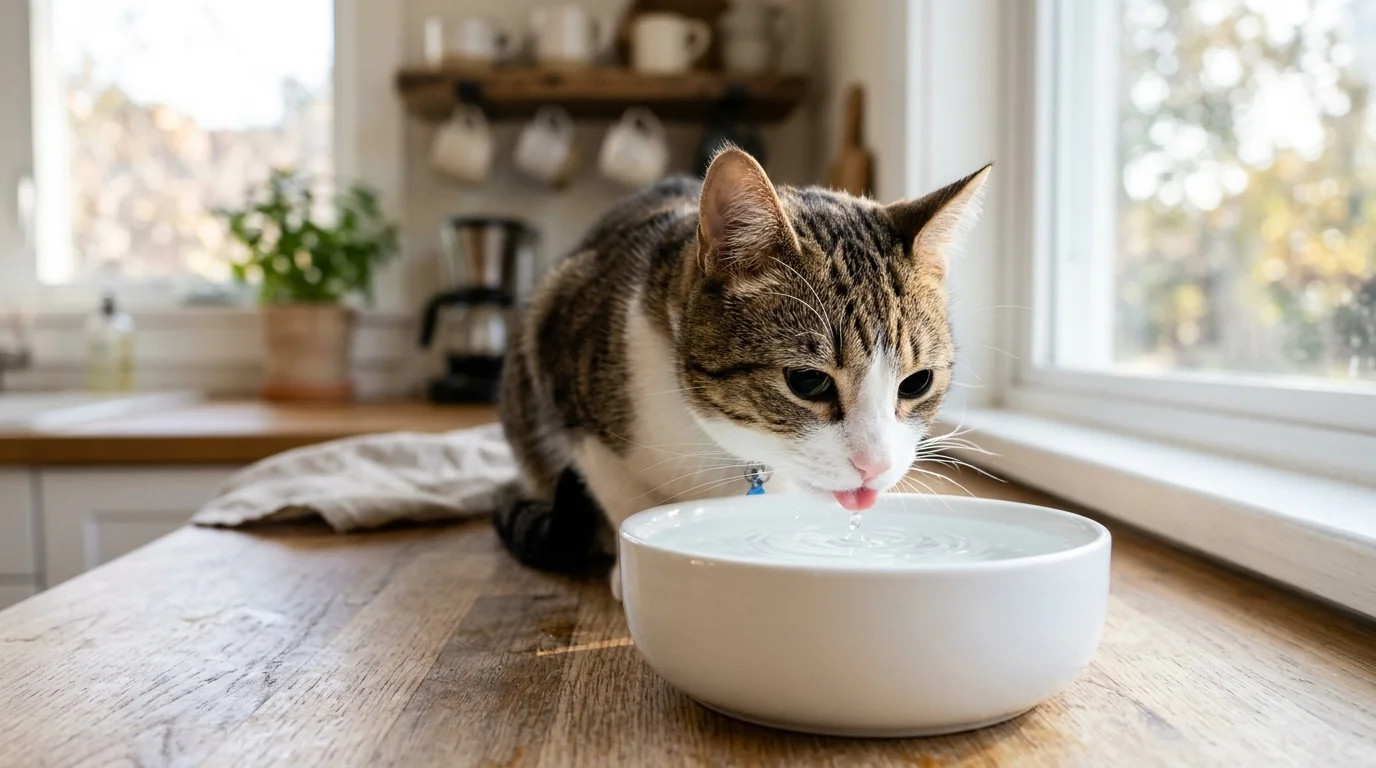
If you suddenly notice your cat lingering at the water fountain, licking droplets from the bathroom faucet, or emptying their bowl twice as fast as usual, take note. Increased thirst (clinically termed polydipsia) coupled with increased urination (polyuria) is one of the clearest clinical warning signs in feline veterinary medicine.
Schedule bloodwork and urinalysis
Sudden excessive drinking in cats—especially cats over seven years old—is rarely behavioral. It frequently signals progressive underlying metabolic illness such as chronic kidney disease, diabetes, or hyperthyroidism. Early veterinary diagnosis dramatically improves life expectancy.
How much water should a cat drink daily?
As a baseline, a healthy cat needs approximately 3.5 to 4.5 ounces (roughly 100 to 130 ml) of water per 5 pounds of body weight each day.
However, diet heavily influences water bowl visits:
- Canned wet food diets: Wet food is roughly 75% to 80% moisture. Cats eating exclusively wet food rarely visit water dishes because their dietary moisture meets daily hydration requirements. Check our guide on best automatic cat feeders for wet food for convenient canned feeding schedules.
- Dry kibble diets: Kibble contains only 8% to 10% moisture. Kibble-fed cats naturally drink more water to balance their hydration, but should still not display obsessive bowl guarding. For balanced nutritional guidelines, consult our guide on how much to feed a cat.
7 medical causes of excessive drinking in cats
1. Chronic Kidney Disease (CKD)
Chronic kidney disease affects more than 30% of senior cats. When nephrons lose their ability to filter blood and concentrate urine, cats produce vast quantities of dilute urine. To compensate for dehydration, the cat experiences intense thirst.
Associated signs: Weight loss, dull coat, sour breath, vomiting clear foam, and fatigue.
2. Feline Diabetes Mellitus
Just like humans, diabetic cats cannot process blood glucose properly due to insulin deficiency or resistance. Excess circulating sugar spills into the urine, pulling vital water out with it via osmotic diuresis.
Associated signs: Insatiable appetite (polyphagia) alongside weight loss, plantigrade walking (walking flat on rear hocks), and heavy, oversized litter box clumps.
3. Hyperthyroidism
Caused by a benign tumor on the thyroid gland, hyperthyroidism accelerates a cat’s entire metabolic rate. Blood pressure spikes and kidney filtration speeds up, driving heavy thirst.
Associated signs: Extreme hyperactivity, ravenous hunger, vocalizing at night, thinning hair, and rapid heart rate.
4. Urinary Tract Infections (UTI) and Bladder Stones
Inflammation or bacterial proliferation in the bladder triggers frequent urges to urinate and a sensation of discomfort that encourages increased fluid consumption. If you notice litter box irregularities, check our troubleshooting guide for a cat not using litter box.
Associated signs: Straining in the litter box, crying while urinating, pink-tinted urine, or licking the genital region frequently.
5. Liver Disease (Hepatic Insufficiency)
The liver plays a vital role in processing metabolic waste and regulating proteins. Chronic liver inflammation or toxins cause systemic water regulation failures.
Associated signs: Jaundice (yellowing of inner ears, gums, and whites of the eyes), nausea, lethargy, and dark orange urine.
6. Dietary shifts or salty treats
A sudden switch from moist canned food to crunchy dry kibble will naturally cause an uptick in water consumption. Similarly, feeding high-sodium human foods (like tuna canned in broth with salt) triggers temporary thirst.
7. Medication side effects
Certain veterinary drugs, particularly corticosteroids (prednisolone) and diuretics used for heart conditions, directly stimulate the kidneys to excrete fluids, resulting in dramatic thirst.
What to monitor and write down before the vet visit
Before heading to your veterinary clinic, documenting your cat’s specific habits will provide your doctor with invaluable diagnostic clues:
| Observation | What to Record | Why It Matters |
|---|---|---|
| Water Intake | Measure water poured vs. left over 24 hours | Confirms if consumption exceeds 100ml/kg/day |
| Litter Clumps | Note clump count and size (tennis-ball vs. baseball) | Identifies polyuria vs. frequent small straining |
| Appetite | Is hunger increased, decreased, or unchanged? | Separates diabetes/hyperthyroidism from kidney failure |
| Weight History | Track monthly scale weight | Distinguishes wasting syndromes from dehydration |
| Grooming Habits | Matted fur, dandruff, or hairballs? | Review our remedies for cat hairball remedies |
Frequently asked questions
How do I measure my cat's 24-hour water intake?+
Fill a measuring cup with 500 ml of water in the morning and pour it into their bowl. Ensure no other water sources are accessible. Exactly 24 hours later, pour the remaining water back into the measuring cup to determine the exact volume consumed.
Is it ever normal for a cat to drink a lot of water?+
Warm summer weather or intense play sessions may temporarily bump water intake slightly. However, persistent heavy drinking over multiple consecutive days is almost never normal in cats and warrants veterinary diagnostics.
Why does my cat suddenly prefer running faucet water?+
Cats instinctively prefer moving water because running streams in nature are fresher and less prone to bacterial contamination than stagnant puddles. While fountain preference is normal, sudden obsession with drinking from any faucet often indicates elevated thirst.
What diagnostic tests will the vet run for increased drinking?+
Your veterinarian will typically start with a Minimum Database: a complete blood count (CBC), chemistry profile (checking BUN, creatinine, glucose, liver enzymes), total T4 (thyroid screen), and a complete urinalysis with specific gravity.
Can stress cause a cat to drink more water?+
Psychogenic polydipsia (compulsive behavioral water drinking due to stress) is extremely rare in felines compared to dogs. Medical conditions must always be rigorously ruled out before considering behavioral causes.
Sources & further reading
This article draws on guidance from these trusted organizations. Always consult your own veterinarian for advice specific to your pet.
Written by
Raghav DeedwaniyaFounder & Editor
Raghav Deedwaniya is the founder and editor of Petifys, and the author behind its pet care content. I’m a lifelong pet owner, not a veterinarian — I’ve been around dogs since childhood, and that hands-on experience is what got me into writing about responsible pet ownership. At Petifys I create practical, easy-to-understand guides, each one carefully researched using trusted sources such as the AVMA, ASPCA and International Cat Care. My aim is to help you make informed everyday decisions — but for anything involving your pet’s health, always consult a qualified veterinarian who can examine your animal in person.
Disclosure: Some links in this article are affiliate links. If you buy through them we may earn a small commission at no extra cost to you. We only recommend products we believe in. Learn more.