How to Keep Cats Off Counters (Gentle Fixes)
Tired of finding paw prints on your kitchen counters? Discover gentle, humane ways to keep cats off counters using vertical space, scent cues, and enrichment.
On this page
Few household habits frustrate cat owners more than turning around while cooking dinner to find feline paws stepping directly across the food prep counter. Beyond hygiene concerns, kitchen countertops harbor hidden dangers for curious felines: hot stove burners, sharp knives, glass cups, and toxic foods like onions and garlic.
Many owners resort to squirt bottles or shouting, only to find their cat continues jumping up the second their back is turned. Cats don’t climb counters out of spite; they do it because height provides safety, stimulation, and tempting food scents. By providing superior alternatives and gentle environmental barriers, you can successfully redirect your cat without damaging your relationship.
Provide an acceptable 'Yes' before saying 'No'
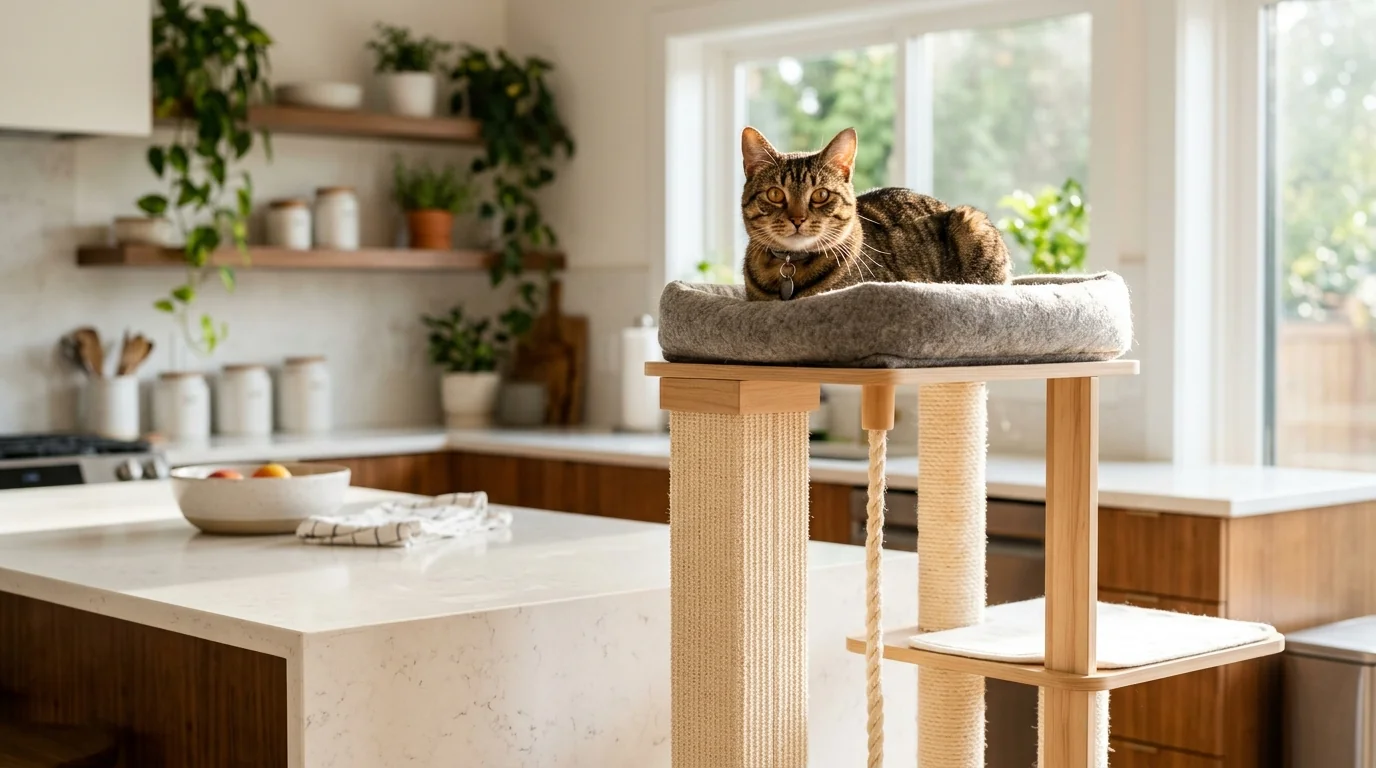
Cats have an innate biological drive to seek high vantage points. If you want your cat off the kitchen counter, you must give them an equally tall, appealing perch nearby where they can observe the kitchen action without setting paw on your food prep surfaces.
Why cats love kitchen counters
Understanding your cat’s motivation is key to breaking the cycle:
- Vertical territory instinct: In nature, wild felines climb trees to spot prey and survey safety. Elevating themselves above ground level is a fundamental security instinct.
- Food scavenging and fascinating aromas: Crumbs, butter dishes, defrosting meat, and running water from the faucet represent irresistible sensory jackpots.
- Boredom and curiosity: Counters are bustling hubs of human activity. Cats want to watch what you are chopping, stirring, and washing.
- Window views: Kitchen counters are frequently situated under high outdoor windows offering prime views of birds, squirrels, and sunbeams.
Similar to our techniques in how to stop cat scratching furniture, successful deterrence requires meeting the underlying instinct rather than punishing the behavior.
The 4-pillar humane solution
Pillar 1: Provide a superior alternative perch
Place a tall, sturdy cat tree, barstool, or wall-mounted cat perch immediately adjacent to your kitchen island. Sprinkle the perch with catnip and place treats on it daily. When your cat chooses the approved perch while you cook, reward them with a lick of cat puree or a piece of chicken. They learn that being on their dedicated perch delivers rewards, while the counter delivers nothing.
Pillar 2: Remove all counter temptations
Never leave food unattended. Store all bread bags, defrosting meats, butter dishes, and leftover snacks inside cupboards or the refrigerator. Wipe counters down immediately with citrus-scented or vinegar-based cleaners after cooking to eliminate residual grease aromas.
Pillar 3: Use benign environmental booby-traps
Punishment delivered by human hands makes cats fear you, not the counter. Instead, let the environment gently deliver the deterrent:
- Double-sided sticky tape or placemats: Cats despise tacky surfaces on their sensitive paw pads. Stick strips of pet-safe double-sided tape or inverted contact paper along the counter perimeter.
- Aluminum foil sheets: Laying sheets of crinkled aluminum foil along the counter edges creates an unfamiliar texture and metallic rustle that startles cats when their paws land.
- Motion-activated air canisters: Devices like Ssscat use an infrared sensor to release a harmless puff of compressed air with a gentle hiss whenever a cat leaps onto the counter. The cat associates the counter itself with the startling breeze, not the human.
Pillar 4: Enrich their daily life
A stimulated, exercised cat is far less prone to kitchen mischief. Schedule two 15-minute interactive play sessions daily using feather wands or laser pointers to expend pent-up predatory drive. For more ideas on enriching indoor life, see our guide on are indoor cats happy.
Effective vs harmful deterrents
| Method | Safety Rating | Long-Term Success | Why It Works / Fails |
|---|---|---|---|
| Dedicated High Perch | Safe & Encouraged | High | Satisfies biological climbing drive in an approved zone |
| Double-Sided Sticky Tape | Safe & Humane | High | Creates unpleasant tactile sensation on paws |
| Motion-Activated Air Canister | Safe & Hands-Off | High | Teaches the environment is unrewarding without human conflict |
| Water Squirt Bottle | Not Recommended | Low | Cat learns to avoid you, but climbs counters when alone |
| Physical Striking or Yelling | Harmful & Ineffective | Zero | Triggers stress, bladder issues, and defensive fear biting |
Observe how your cat communicates their boundaries by reading cat tail language explained. If you are welcoming a new kitten into your home, establish good counter habits early using our first-time cat owner guide.
Frequently asked questions
Why does my cat only jump on the counter when I leave the room?+
If you have previously yelled at or squirted your cat, they associate the punishment with your presence, not the counter itself. They learn that jumping is safe whenever humans are absent. Hands-off deterrents like double-sided tape resolve this.
Is aluminum foil really safe to keep cats off counters?+
Yes. Clean household aluminum foil poses no toxic risk to cats. Most cats dislike the slick, crinkly sensation under their paws and will immediately jump down upon landing on it.
What smells do cats hate on countertops?+
Cats have intense scent sensitivity and naturally avoid citrus (lemon, orange, grapefruit), rosemary, eucalyptus, peppermint, and vinegar. Using citrus-scented pet-safe cleaning sprays helps naturally discourage counter investigation.
Can I train my cat to get down with a vocal cue?+
Yes. Teach an 'Off' cue by tossing a tasty treat onto the floor every time they land on the counter while calmly saying 'Off'. Never pick them up with loving cuddles, as that inadvertently rewards the counter jump with affection.
How long does it take to train a cat off counters?+
With consistent tactile deterrents, pristine food cleanup, and a nearby cat tower, most felines abandon counter exploration within 10 to 14 days.
Sources & further reading
This article draws on guidance from these trusted organizations. Always consult your own veterinarian for advice specific to your pet.
Written by
Raghav DeedwaniyaFounder & Editor
Raghav Deedwaniya is the founder and editor of Petifys, and the author behind its pet care content. I’m a lifelong pet owner, not a veterinarian — I’ve been around dogs since childhood, and that hands-on experience is what got me into writing about responsible pet ownership. At Petifys I create practical, easy-to-understand guides, each one carefully researched using trusted sources such as the AVMA, ASPCA and International Cat Care. My aim is to help you make informed everyday decisions — but for anything involving your pet’s health, always consult a qualified veterinarian who can examine your animal in person.
Disclosure: Some links in this article are affiliate links. If you buy through them we may earn a small commission at no extra cost to you. We only recommend products we believe in. Learn more.