How to Stop Cat Scratching Furniture: 6 Easy Fixes
Save your sofa! Learn why cats scratch, how to redirect the behavior without punishment, and the best placement for scratching posts in your home.
On this page
- Why cats scratch: it’s not bad behavior
- The 4 biggest mistakes cat owners make
- 6 steps to redirect scratching off your sofa
- Step 1: Analyze your cat’s scratching style
- Step 2: Position the alternative right next to the crime scene
- Step 3: Make the furniture temporarily unappealing
- Step 4: Make the scratching post irresistible
- Step 5: Keep claws trimmed regularly
- Step 6: Address underlying household stress
Coming home to shredded upholstery or frayed carpet corners is one of the most frustrating challenges of living with cats. Many cat owners believe scratching is done out of spite, boredom, or bad manners. In reality, scratching is an essential biological necessity — cats cannot simply decide not to scratch any more than humans can choose not to stretch or blink.
Understanding how to stop cat scratching furniture is not about suppressing the natural instinct; it is about redirecting that instinct onto dedicated, satisfying surfaces your cat prefers over your sofa.
The fundamental rule
Never punish a scratching cat. Yelling, squirt bottles, and physical deterrents only teach your cat to fear you or scratch when you leave the room. Provide better scratching alternatives and reward their use.
Why cats scratch: it’s not bad behavior
Cats scratch for multiple instinctual and physiological reasons:
- Claw maintenance: Scratching sheds the dull outer husk (sheath) of the claw, uncovering the razor-sharp new nail underneath.
- Visual and scent territorial marking: Cats have interdigital scent glands located between the pads of their paws. When they rake their claws down a surface, they deposit unique chemical pheromones while leaving visible scratch marks that signal security and territory ownership.
- Full-body stretching and muscle conditioning: Digging their claws into fibrous material allows cats to anchor their front limbs and pull backward, exercising the spine, shoulders, and foreleg muscles after long naps.
- Emotional decompression and arousal regulation: Just like kneading (which we explain in depth in why do cats knead), scratching helps cats express excitement, relieve frustration, or transition from sleep to wakefulness.
The 4 biggest mistakes cat owners make
Before buying more gear, make sure you are not unintentionally sabotaging your efforts:
| Common Mistake | Why Cats Reject It | The Quick Fix |
|---|---|---|
| Flimsy, wobbly scratching posts | Post rocks when weight is applied; cat fears collapse | Choose heavy, solid wooden bases |
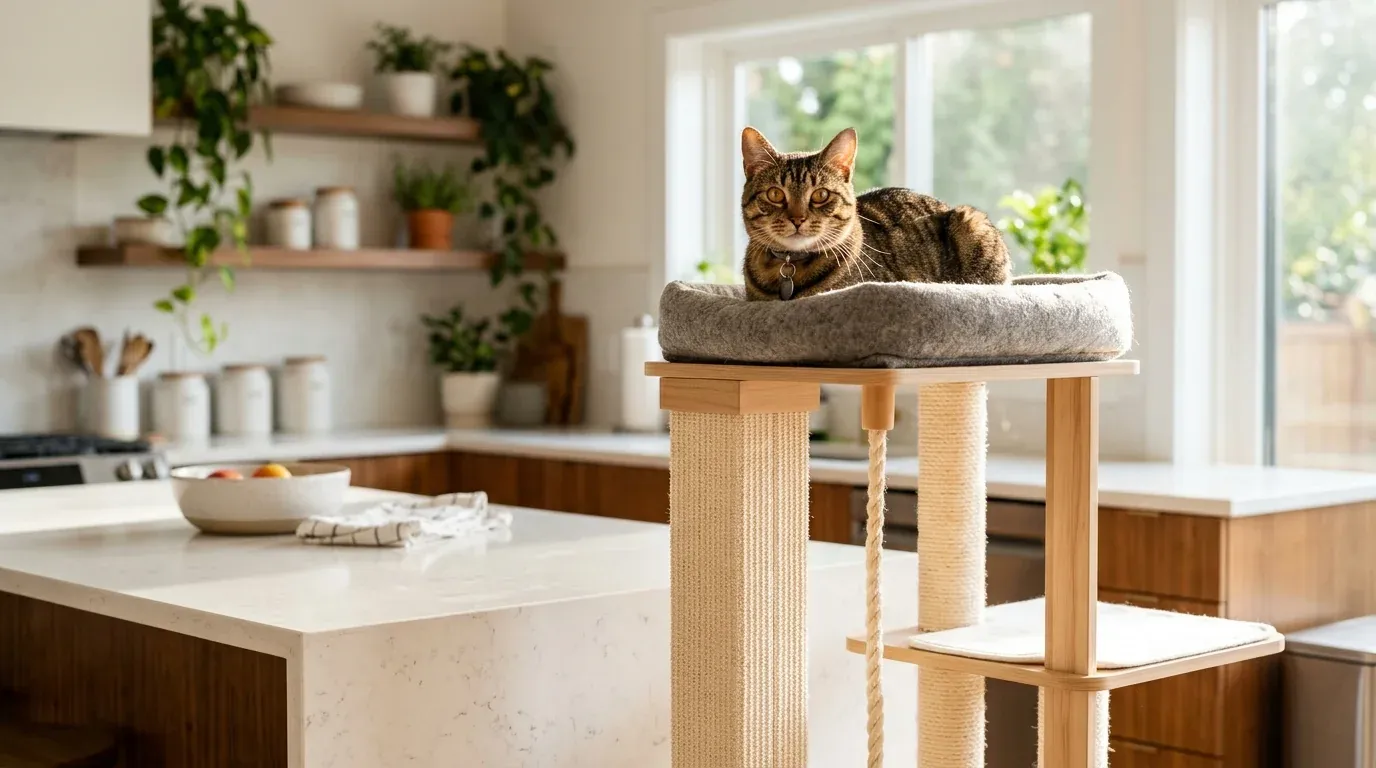
| Short posts under 30 inches | Cat cannot achieve a full vertical body stretch | Buy posts at least 32 to 36 inches tall |
| Tucking posts in hidden corners | Cats mark high-traffic social hubs, not empty closets | Place scratchers directly next to targeted furniture |
| Carpet-covered posts | Cat cannot tell the difference between post carpet and floor rugs | Choose woven sisal rope or heavy cardboard |
6 steps to redirect scratching off your sofa
Step 1: Analyze your cat’s scratching style
Every cat has an innate material and orientation preference:
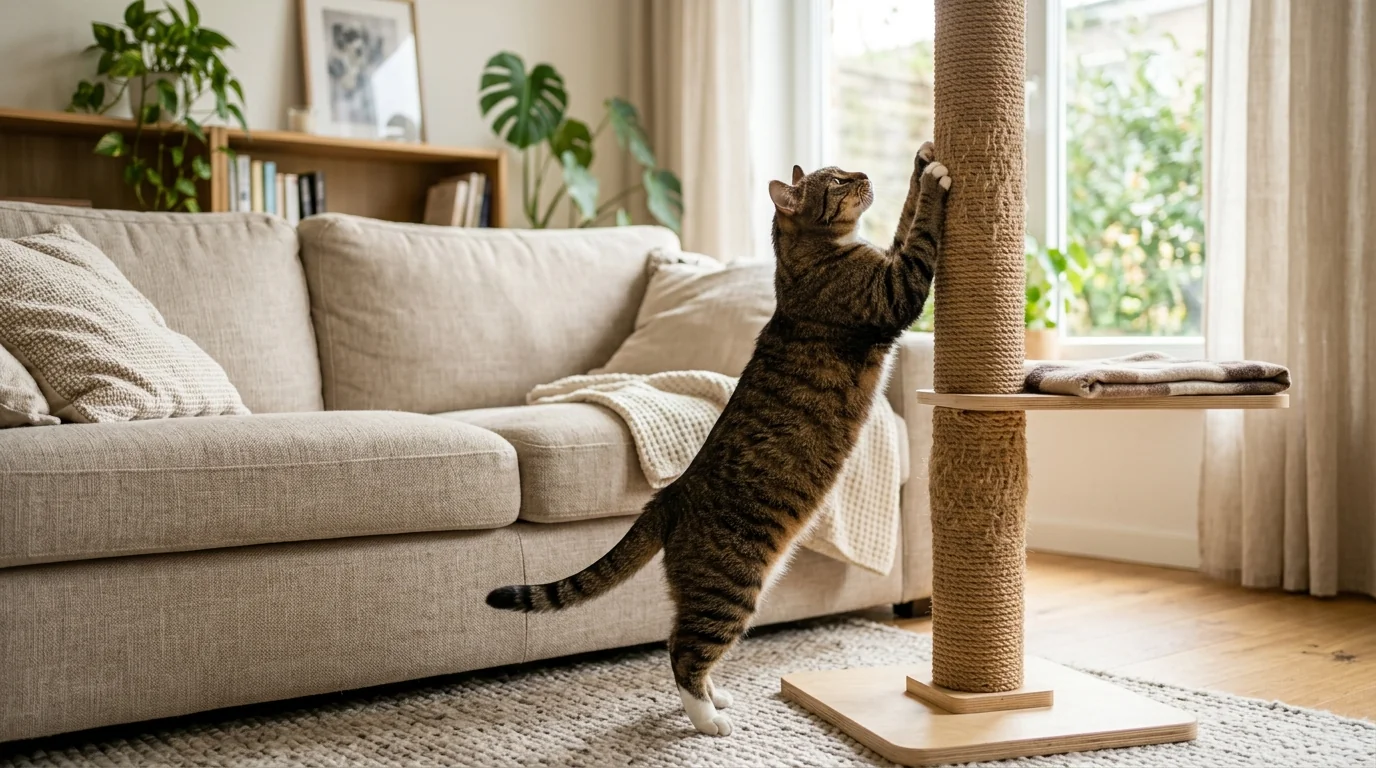
- Vertical scratchers: Cats who reach high up sofa arms or wooden doorframes prefer tall, rigid posts wrapped in rough sisal rope or natural wood bark.
- Horizontal scratchers: Cats who target floor carpets or staircase runners prefer flat corrugated cardboard scratchers, sisal floor mats, or angled ramps.
Match your replacement scratcher to your cat’s current target.
Step 2: Position the alternative right next to the crime scene
Cats scratch where they spend time and where household scents converge. If your cat scratches the front-right arm of the living room sofa, placing a new post in the hallway will fail.
Put the new scratcher directly in front of the scratched sofa corner, touching the fabric. Once your cat regularly uses the post over two to three weeks, you can slowly migrate the post an inch per day toward your desired permanent spot.
Step 3: Make the furniture temporarily unappealing
While your cat learns to love the new post, make the old spot physically unappealing:
- Apply double-sided pet training tape (sticky paws tape) to the targeted fabric. Cats dislike sticky sensations on their paw pads.
- Drape smooth aluminum foil or a heavy vinyl furniture guard over the corner.
- Use an enzymatic cleaner if the cat has been marking the area repeatedly, neutralizing lingering paw pheromones.
Step 4: Make the scratching post irresistible
Enhance the appeal of the approved post:
- Rub fresh organic catnip or spray silvervine extract into the sisal weave.
- Drape a favorite feather wand toy over the top of the post to encourage climbing and swatting.
- Reward with a treat every single time you see your cat place their paws on the post.
Step 5: Keep claws trimmed regularly
Trimming the sharp curved tips off your cat’s front claws every two to three weeks significantly reduces the destructive impact on household fabrics. If you are new to feline grooming and litter management, review our essential recommendations in the first-time cat owner guide.
Step 6: Address underlying household stress
Sudden, intense scratching on multiple pieces of furniture often signals territorial anxiety. A new neighborhood cat outside the window, a recent move, or conflict with another indoor pet can trigger stress-marking. Environmental stress can also cause sudden litter box aversion; see our troubleshooting steps in why is my cat not using the litter box and how to litter train a kitten.
Why declawing is not an option
Declawing (onychectomy) is not a simple manicure — it is the surgical amputation of the last bone of each toe, equivalent to amputating a human finger at the first knuckle. Declawing frequently causes chronic nerve pain, arthritis, biting problems, and litter box avoidance. Modern veterinarians and animal welfare organizations strongly oppose cosmetic declawing.
Providing appropriate outlets for natural behaviors is the foundation of compassionate pet ownership. With proper post stability, prime room placement, and patience, your cat and your furniture can comfortably coexist.
Frequently asked questions
Why does my cat scratch right next to me when I walk in?+
Cats frequently scratch upon greeting their owners as an emotional release. Seeing you return home creates a surge of happy excitement, and scratching an adjacent post is their way of releasing emotional energy, stretching, and marking territory.
Does double-sided tape ruin couches?+
Most dedicated pet training tapes use gentle medical-grade adhesives that do not damage durable polyester, microfibre, or woven upholstery. However, always test a tiny hidden patch on delicate fabrics, velvet, or genuine leather before full application.
Will scratching posts ruin my home's aesthetic?+
Modern cat furniture includes minimalist wooden towers, woven jute wall-mounted scratch panels, and stylish geometric cardboard loungers that blend seamlessly into contemporary home decor.
Can I train an older cat to stop scratching furniture?+
Yes. Age does not prevent cats from adopting new scratching surfaces. Older cats often develop arthritis and may transition from tall vertical posts to horizontal or gently sloped cardboard scratchers that are easier on aging joints.
Why does my cat scratch the carpet instead of their post?+
Carpet scratching indicates a strong horizontal preference. Provide wide corrugated cardboard scratchers, heavy sisal floor mats, or woven seagrass pads placed flat on the floor where they usually scratch.
Sources & further reading
This article draws on guidance from these trusted organizations. Always consult your own veterinarian for advice specific to your pet.
Written by
Raghav DeedwaniyaFounder & Editor
Raghav Deedwaniya is the founder and editor of Petifys, and the author behind its pet care content. I’m a lifelong pet owner, not a veterinarian — I’ve been around dogs since childhood, and that hands-on experience is what got me into writing about responsible pet ownership. At Petifys I create practical, easy-to-understand guides, each one carefully researched using trusted sources such as the AVMA, ASPCA and International Cat Care. My aim is to help you make informed everyday decisions — but for anything involving your pet’s health, always consult a qualified veterinarian who can examine your animal in person.
Disclosure: Some links in this article are affiliate links. If you buy through them we may earn a small commission at no extra cost to you. We only recommend products we believe in. Learn more.