How to Potty Train an Adult Dog or Rescue Dog
Adopted an adult dog or rescue with house-training issues? Discover proven step-by-step potty training methods, routine schedules, and accident cleanup tips.
On this page
- Why adult dogs have indoor accidents
- The 4-step adult dog house-training protocol
- Step 1: Manage freedom with the “Umbrella of Supervision”
- Step 2: Establish a strict elimination schedule
- Step 3: Choose a dedicated outdoor spot and command
- Step 4: Jackpot reward within 2 seconds
- Handling indoor accidents without punishment
Bringing home an adult rescue dog or dealing with sudden house-training regression in an older canine can test any owner’s patience. Many people mistakenly assume adult dogs arrive automatically housebroken. In reality, rescue dogs from shelters, outdoor kennels, or puppy mills may have spent years living on concrete or gravel, never learning what carpet or hardwood floors represent.
The good news is that adult dogs possess stronger bladder capacity and developed cognitive abilities compared to tiny puppies. With a consistent routine and positive reinforcement, potty training an adult dog often progresses faster than training an eight-week-old puppy.
Rule out medical issues first
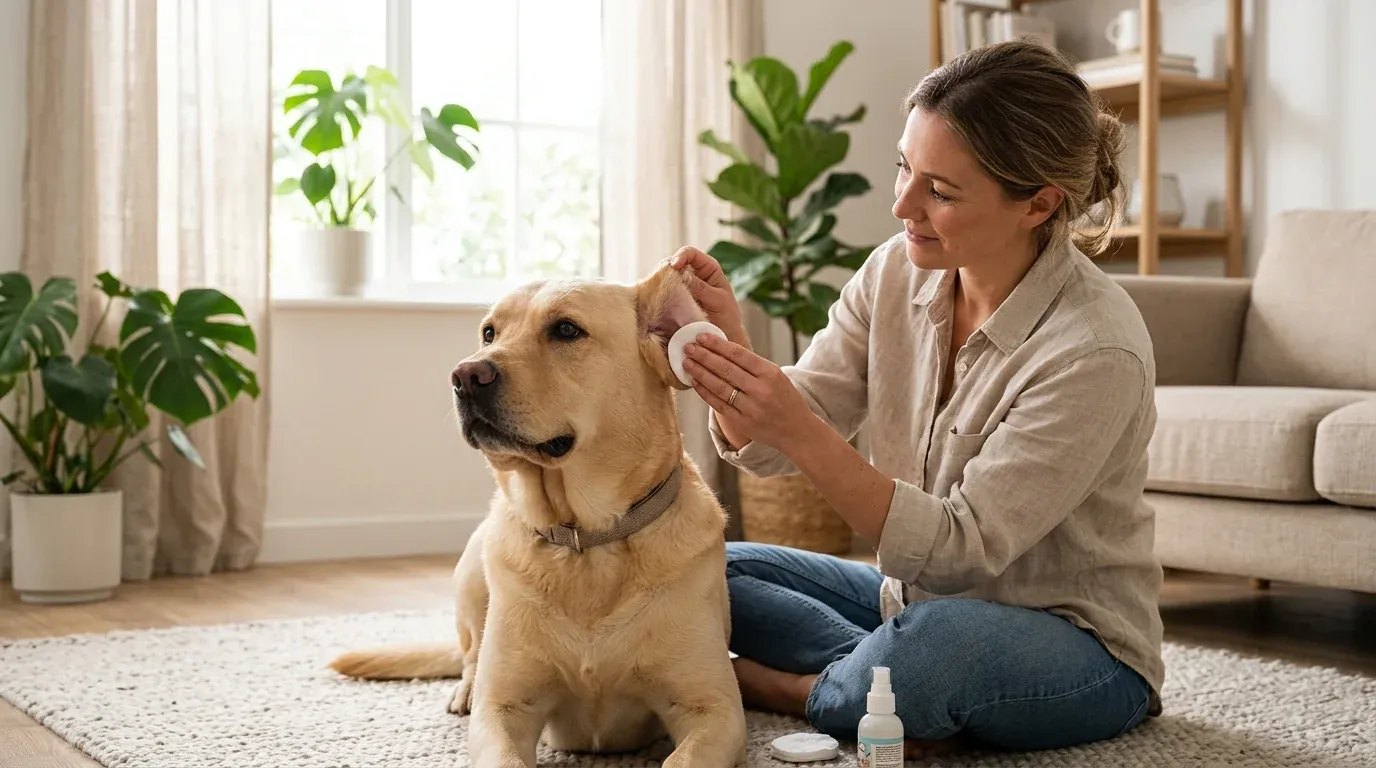
If an adult dog suddenly starts urinating indoors after years of reliability, schedule a veterinary urinalysis immediately. Urinary tract infections (UTIs), kidney disease, Cushing’s syndrome, diabetes, and canine cognitive dysfunction frequently mimic behavioral regression.
Why adult dogs have indoor accidents
Understanding your dog’s history helps tailor your training strategy:
- Substrate preference confusion: Dogs develop preferences for surfaces they eliminated on during early development. A dog raised on turf or concrete may find soft living room rugs confusingly similar to bathroom pads.
- Shelter kennel habituation: In rescue shelters or outdoor runs, dogs are often forced to eliminate near their sleeping pads. Re-establishing the den instinct takes structured time.
- Territorial scent-marking: Intact males or insecure newly adopted dogs may mark vertical surfaces (doorframes, couch corners) with small squirts of urine to establish security in a novel environment.
- Stress and transitional anxiety: Moving into a new home causes cortisol spikes, loosening digestive control and making bathroom signals erratic.
If you previously raised a young pup, you may recognize similarities to our guide on how to potty train a puppy fast, but adult dogs require specific management shifts.
The 4-step adult dog house-training protocol
Step 1: Manage freedom with the “Umbrella of Supervision”
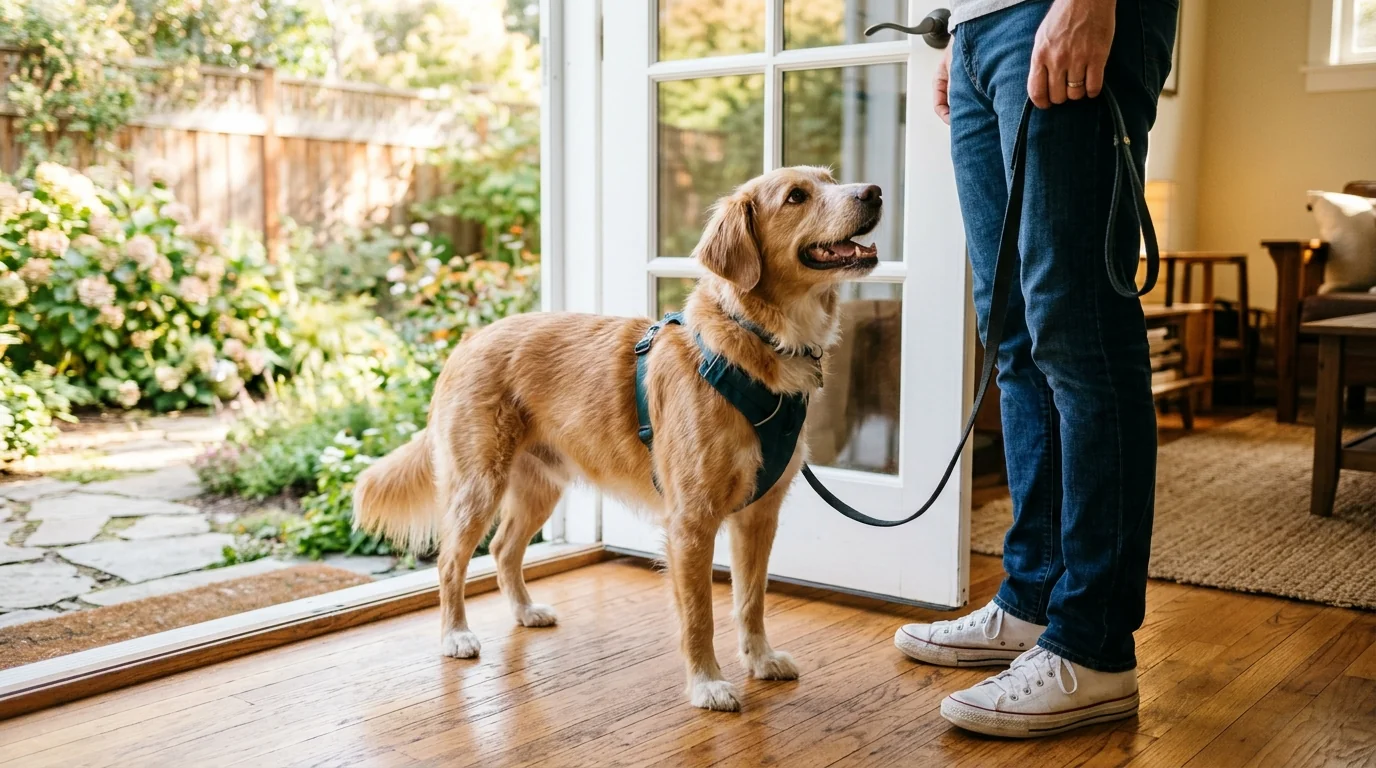
Never give an un-housebroken adult dog free roam of your house. When you are together, keep them in the same room on a lightweight 6-foot leash (the umbilical cord method) or behind baby gates. If your dog begins sniffing frantically, circling, or pacing toward an exterior door, you can intervene immediately.
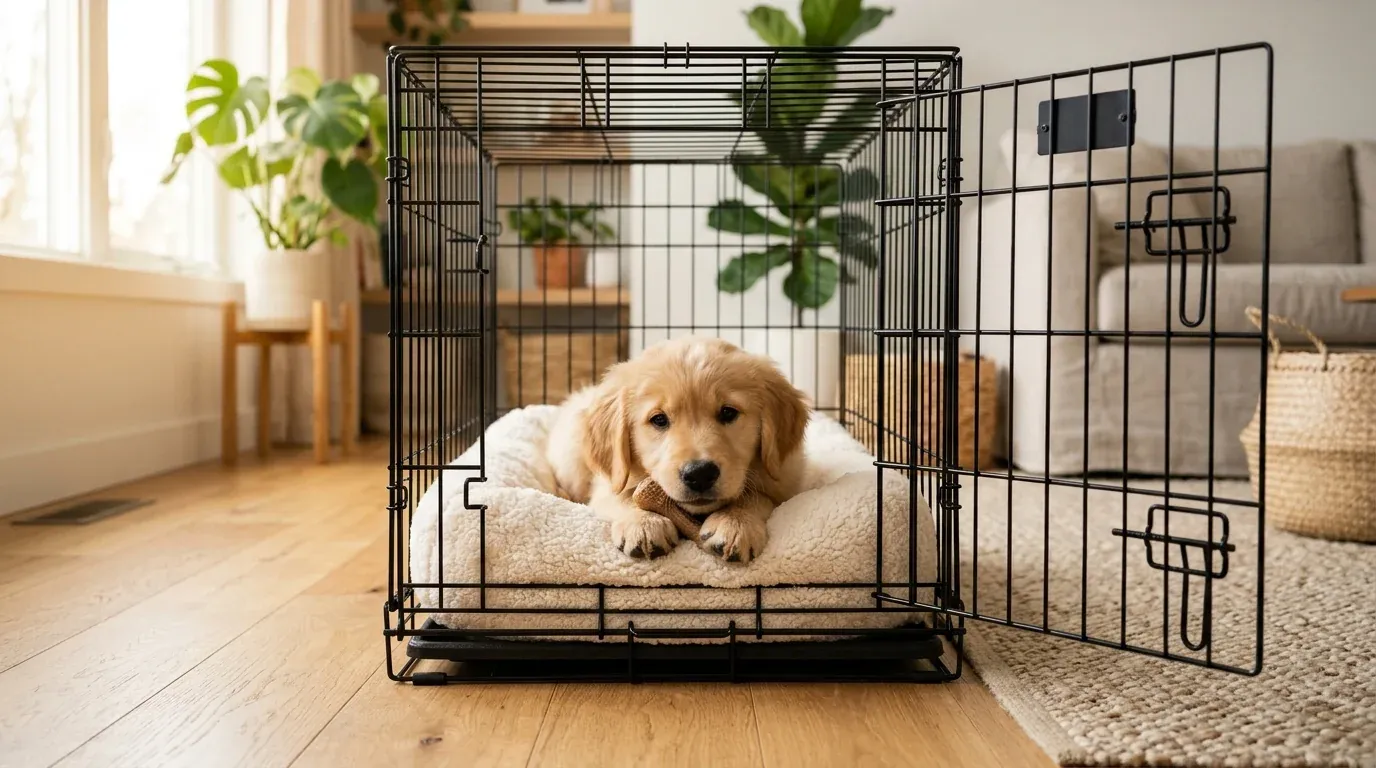
When you cannot actively supervise, secure your dog in a properly sized crate. Review our guide on best dog crates for puppies and adult dogs for sizing rules, or read our tips on how to crate train a rescue dog if they resist confinement.
Step 2: Establish a strict elimination schedule
Adult bladders can hold urine for 6 to 8 hours during the workday, but during active training, provide frequent structured bathroom opportunities:
| Time of Day | Routine Action | Goal |
|---|---|---|
| First thing morning (6:30 AM) | Leash walk directly to designated potty spot | Full morning bladder release |
| Post-Breakfast (7:30 AM) | 10-minute quiet backyard visit | Stimulates gastrocolic reflex |
| Midday (12:30 PM) | Brisk stroll or garden break | Relieves daytime pressure |
| Late Afternoon (5:30 PM) | Extended walk and sniffing session | Bowel evacuation |
| Post-Dinner (7:00 PM) | Outdoor visit | Digestion check |
| Before Bed (10:30 PM) | Quick bathroom check on leash | Empty bladder for uninterrupted sleep |
Step 3: Choose a dedicated outdoor spot and command
Lead your dog on leash to the exact same square of grass or mulch every time. Lingering scent molecules signal to their brain that this is the designated bathroom zone. Stand quietly without playing or talking for 3 to 5 minutes.
As they begin eliminating, gently say your cue word (e.g., “Go potty” or “Get busy”).
Step 4: Jackpot reward within 2 seconds
The instant your dog finishes, deliver an enthusiastic verbal praise and a high-value treat (such as small cubes of roast chicken or hot dog). The reward must happen outdoors within two seconds of completion, not three minutes later when you return to the kitchen.
Handling indoor accidents without punishment
Never rub your dog’s nose in urine, yell, or strike them. Punishment does not teach a dog where to go; it simply teaches them that humans are dangerous when bathroom business occurs. Dogs subjected to harsh scolding learn to hide behind sofas or sneak into quiet bedrooms to eliminate secretly.
- If caught in the act: Make a gentle, neutral interruptive sound (“Oops, let’s go outside!”), guide them outdoors swiftly, and reward if they finish outside.
- If found after the fact: Clean it silently. Dogs cannot connect punishment to an action performed even two minutes earlier.
- Clean with enzymatic cleaners: Standard bleach or ammonia-based cleaners smell like urine to a dog’s keen nose, triggering re-marking. Always saturate the area with an enzymatic cleaner that digests uric acid crystals.
If your rescue exhibits nighttime restlessness or stress whimpering, review our strategies for puppy crying when left alone which apply equally well to anxious adult rescues.
Frequently asked questions
How long does it take to housebreak an adult dog?+
Most adult rescue dogs learn house manners within 2 to 4 weeks of consistent management, structured schedules, and strict supervision. Dogs with deep puppy-mill background habits may take 2 to 3 months to develop solid bathroom reliability.
Why does my rescue dog pee inside right after coming from a walk?+
Outdoor environments can overwhelm nervous rescue dogs with sights, smells, and traffic sounds. They may be too stimulated to relax sphincter muscles outdoors. Once back inside the safety of the house, their body relaxes, resulting in an accident. Keep outdoor trips calm and unhurried.
Are belly bands effective for male dogs marking indoors?+
Belly bands are excellent short-term management tools to prevent damage to furniture while teaching house rules, but they are not a substitute for training. Always combine wraps with active supervision and scheduled outdoor potty breaks.
How do I know if my dog's accidents are behavioral or a UTI?+
Signs of a urinary tract infection include frequent straining, passing tiny drops of urine, licking genitals constantly, cloudy or foul-smelling urine, and sudden indoor accidents from a previously reliable dog. Have a vet test a urine sample.
Can older senior dogs lose bladder control?+
Yes. Senior dogs can develop hormone-responsive urinary incontinence (common in spayed females) or canine cognitive dysfunction. Medications like phenylpropanolamine or incurin can often successfully restore sphincter tone.
Sources & further reading
This article draws on guidance from these trusted organizations. Always consult your own veterinarian for advice specific to your pet.
Written by
Raghav DeedwaniyaFounder & Editor
Raghav Deedwaniya is the founder and editor of Petifys, and the author behind its pet care content. I’m a lifelong pet owner, not a veterinarian — I’ve been around dogs since childhood, and that hands-on experience is what got me into writing about responsible pet ownership. At Petifys I create practical, easy-to-understand guides, each one carefully researched using trusted sources such as the AVMA, ASPCA and International Cat Care. My aim is to help you make informed everyday decisions — but for anything involving your pet’s health, always consult a qualified veterinarian who can examine your animal in person.
Disclosure: Some links in this article are affiliate links. If you buy through them we may earn a small commission at no extra cost to you. We only recommend products we believe in. Learn more.