How to Clean Dog Ears at Home (Step-by-Step Guide)
Learn how to clean your dog’s ears safely at home without causing pain or infection. Step-by-step cleaning instructions, red flags, and essential vet tips.
On this page
- When should you clean your dog’s ears?
- Supplies you need before starting
- Step-by-step guide to cleaning dog ears
- Step 1: Create a relaxed, positive environment
- Step 2: Inspect the ear flap and canal opening
- Step 3: Apply the ear cleaning solution
- Step 4: Massage the base of the ear for 30 seconds
- Step 5: Let your dog shake their head
- Step 6: Wipe away loosened wax
- Step 7: Reward generously
- Ear cleaning dos and don’ts
Cleaning your dog’s ears is one of the most essential yet frequently overlooked grooming tasks. Because canine ear canals feature an L-shaped structure that bends downward and inward, moisture, wax, and debris easily become trapped. Without routine maintenance, this dark, warm environment invites yeast and bacterial ear infections (otitis externa).
Whether you have a floppy-eared hound prone to moisture retention or a perky-eared pup that loves swimming, learning how to clean dog ears properly keeps your pet comfortable and prevents costly veterinary bills.
Never insert cotton swabs into the ear canal
Never use Q-tips or cotton swabs inside your dog’s ear canal. Doing so packs wax and debris deeper toward the eardrum and risks puncturing delicate structures if your dog makes a sudden head jerk. Only clean what you can easily see.
When should you clean your dog’s ears?
More cleaning is not always better. Over-cleaning strips natural protective lipids, drying out the delicate epithelial lining and causing rebound irritation.
- Dogs with floppy ears (Bassets, Spaniels, Retrievers): Inspect weekly; clean every 1 to 2 weeks or after swimming.
- Dogs with erect prick ears (German Shepherds, Huskies): Inspect monthly; clean only when visible wax buildup appears.
- Water-loving dogs: Flush or dry ears after every lake swim or bath to prevent trapped moisture.
Pairing ear hygiene with other routine handling, such as how to trim dog nails at home, builds calm grooming cooperation. If your puppy is young, introduce ear handling as part of your early puppy socialization checklist.
Supplies you need before starting
Gather all items beforehand so the session remains quick and low-stress:
- Veterinary-formulated ear cleaning solution: Look for an alcohol-free cleaner with gentle drying agents and mild acidifiers (such as lactic or salicylic acid). Avoid vinegar, hydrogen peroxide, or rubbing alcohol.
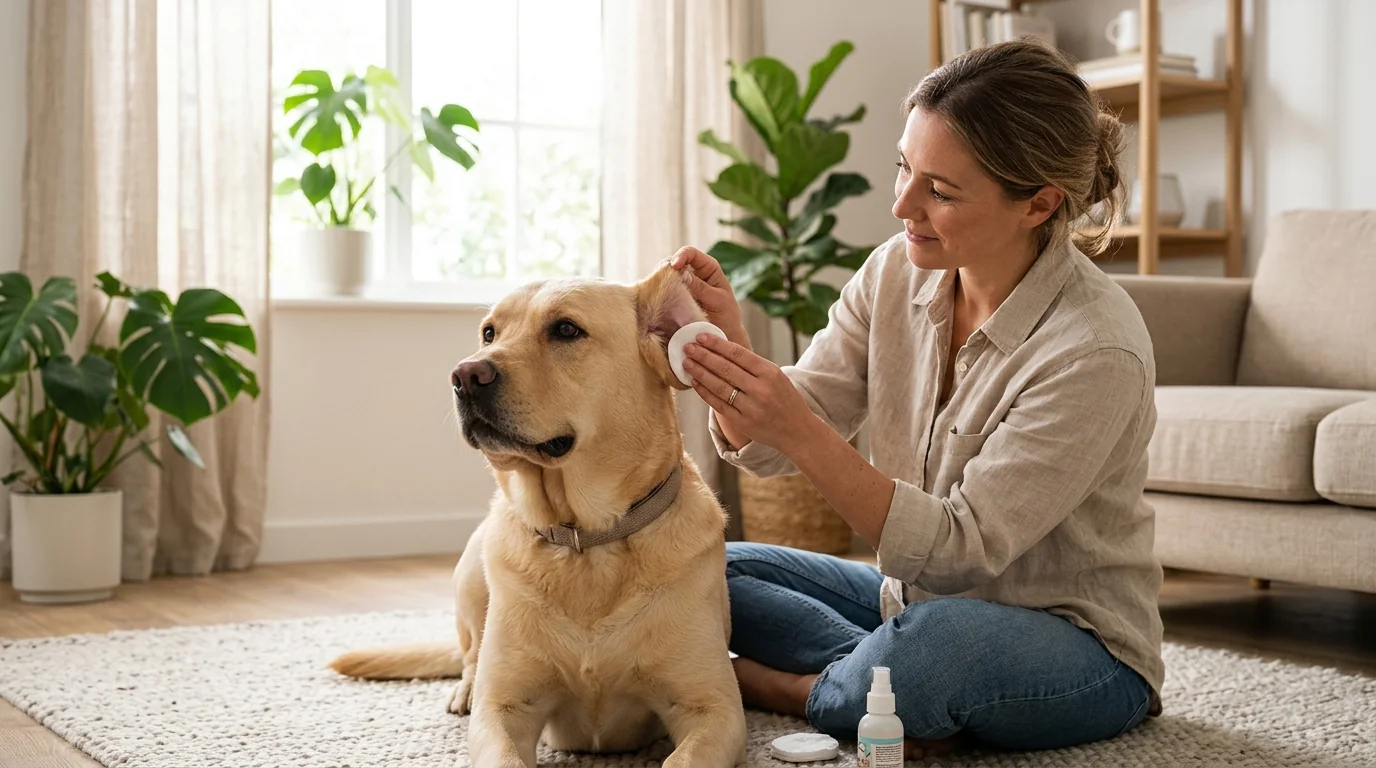
- Cotton rounds or medical gauze pads: Ideal for gently wiping away loosened wax.
- High-value rewards: Tiny pieces of freeze-dried meat or cheese to reward calm behavior throughout.
- An old towel: Ear cleaning can be messy when your dog vigorously shakes their head.
Step-by-step guide to cleaning dog ears
Step 1: Create a relaxed, positive environment
Choose a quiet room with easy-to-clean flooring, such as a bathroom or patio. Have your dog sit or lie down comfortably. Offer a treat and gently massage the base of their ear to gauge their comfort level.
Step 2: Inspect the ear flap and canal opening
Gently lift the pinna (ear flap) upward and look inside. A healthy ear is pale pink, free of redness, and odorless with minimal light-tan wax. If you notice swelling, foul yeast odor, or black discharge resembling coffee grounds, pause and call your vet.
Step 3: Apply the ear cleaning solution
Hold the ear flap upright with one hand. Position the nozzle of the cleaner bottle near the canal entrance without jamming the tip inside. Gently squeeze a generous amount of solution until the canal fills with fluid.
Step 4: Massage the base of the ear for 30 seconds
Before your dog shakes their head, grasp the cartilaginous base of the ear just below the opening. Massage gently in circular motions for 20 to 30 seconds. You should hear a distinct “squishing” sound as the cleaner breaks up hardened wax and cellular debris.
Step 5: Let your dog shake their head
Step back and allow your pet to shake naturally. The centrifugal force dislodges deep debris and lifts it up into the outer ear flap where you can reach it safely.
Step 6: Wipe away loosened wax
Take a clean cotton ball or gauze pad wrapped around your index finger and gently wipe the outer canal entrance and inner ear flap. Wipe upward away from the canal. Repeat with fresh pads until they wipe clean.
Step 7: Reward generously
Praise your dog with enthusiasm and provide their favorite treat. Positive reinforcement teaches your companion that ear care is rewarding rather than frightening.
Ear cleaning dos and don’ts
| Do | Don’t |
|---|---|
| Use vet-approved drying ear flushes | Never pour rubbing alcohol or hydrogen peroxide in ears |
| Massage the ear base to loosen deep wax | Never probe deep canal canals with Q-tips |
| Dry ears thoroughly after swimming | Never force an ear cleaning if your dog yelps in pain |
| Check for redness, head tilting, or hot skin | Don’t ignore signs like paw licking or face rubbing |
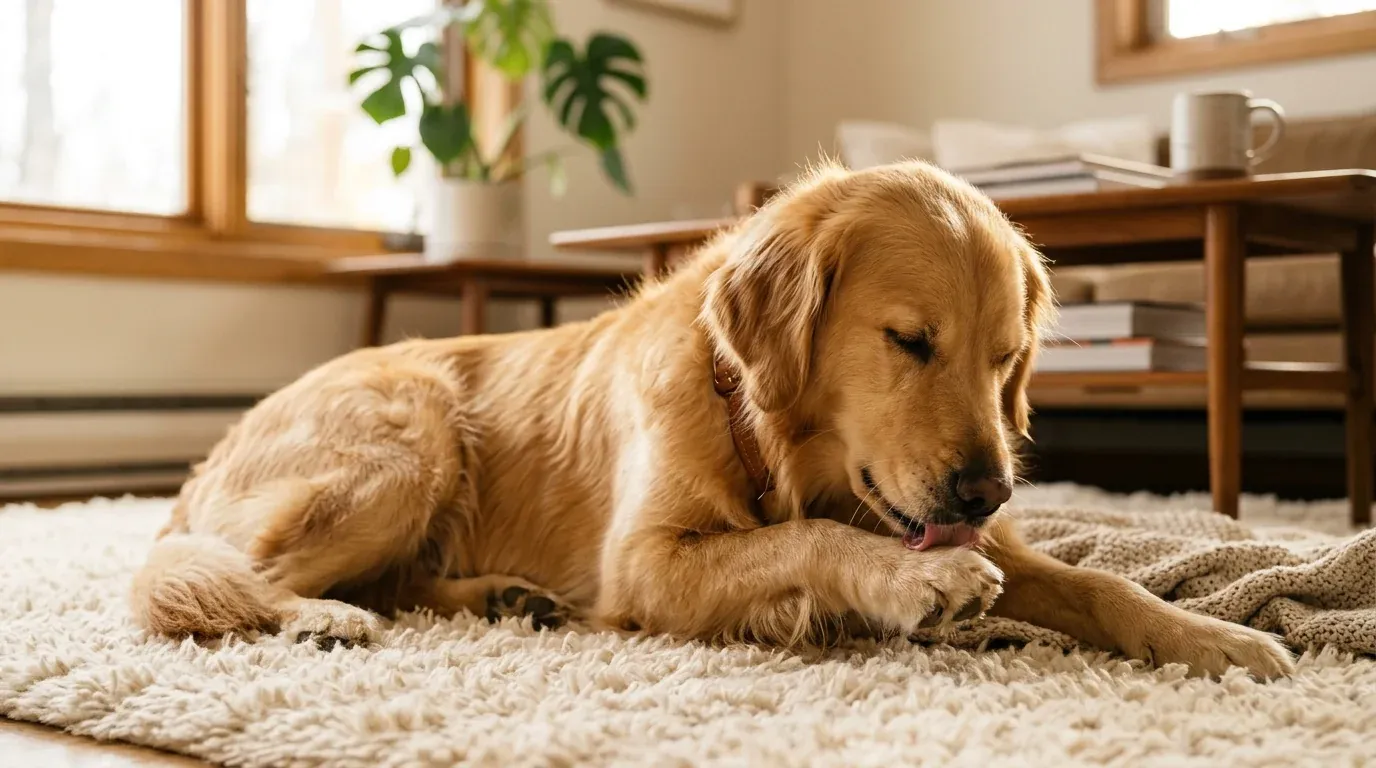
If your dog frequently scratches their face or licks their paws in addition to shaking their head, environmental allergies may be at play. Review our guide on why does my dog lick their paws for deeper diagnostic clues. For general pet prep, check our first-time puppy owner guide.
Frequently asked questions
Can I clean my dog's ears with apple cider vinegar or witch hazel?+
No. Homemade remedies containing vinegar, witch hazel, or alcohol can cause intense stinging and chemical burns if the ear canal is inflamed or the eardrum is ruptured. Always stick with pH-balanced veterinary cleaners.
Why does my dog's ear smell like sour yeast?+
A sour, fermented smell usually indicates a Malassezia yeast infection. Yeast thrives in warm, humid ear canals. If your dog shakes their head or scratches persistently, contact your vet for a diagnostic cytology swab and antifungal drops.
How often should I clean my dog's ears?+
Most healthy dogs need ear cleaning once a month. Floppy-eared breeds or regular swimmers may need cleanings every one to two weeks. Avoid cleaning daily unless specifically directed by your veterinarian, as excessive moisture promotes infections.
What does black ear wax in dogs mean?+
Dark brown or black crumbly discharge that looks like coffee grounds is a classic sign of ear mites (Otodectes cynotis) or chronic yeast and bacterial otitis. It requires prescription veterinary medication to eliminate.
My dog cries when I touch their ear. What should I do?+
Stop immediately and schedule a veterinary visit. Crying or whining during ear handling indicates severe pain, deep ulceration, or an active infection that requires professional pain relief and targeted medication.
Sources & further reading
This article draws on guidance from these trusted organizations. Always consult your own veterinarian for advice specific to your pet.
Written by
Raghav DeedwaniyaFounder & Editor
Raghav Deedwaniya is the founder and editor of Petifys, and the author behind its pet care content. I’m a lifelong pet owner, not a veterinarian — I’ve been around dogs since childhood, and that hands-on experience is what got me into writing about responsible pet ownership. At Petifys I create practical, easy-to-understand guides, each one carefully researched using trusted sources such as the AVMA, ASPCA and International Cat Care. My aim is to help you make informed everyday decisions — but for anything involving your pet’s health, always consult a qualified veterinarian who can examine your animal in person.
Disclosure: Some links in this article are affiliate links. If you buy through them we may earn a small commission at no extra cost to you. We only recommend products we believe in. Learn more.