Why Does My Dog Lick Their Paws? Causes & Fixes
Is your dog constantly licking or chewing their paws? Learn the top causes from environmental allergies to pododermatitis, plus safe remedies and vet signs.
On this page
- Common reasons why dogs lick their paws
- 1. Environmental allergies (Atopy)
- 2. Food allergies or dietary sensitivities
- 3. Foreign objects and physical injuries
- 4. Secondary yeast and bacterial infections
- 5. Boredom, stress, and separation anxiety
- 6. Arthritic pain and joint discomfort
- How to assess your dog’s paws at home
- Safe home remedies and preventive care
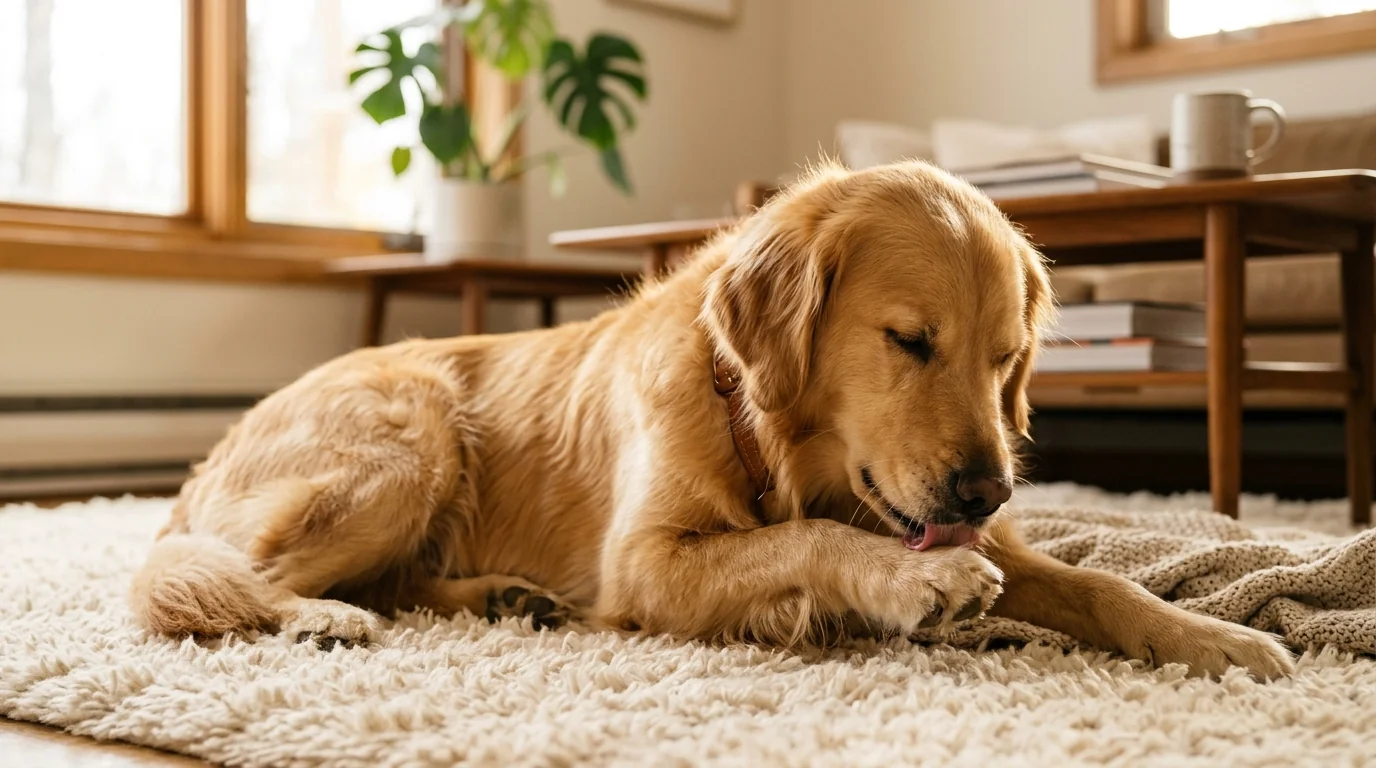
Few sounds keep dog parents awake at night quite like the rhythmic, slurping noise of a dog licking their paws. An occasional lick after an outdoor stroll is standard self-grooming. However, when paw licking turns into obsessive gnawing, chewing, or limping, it is a clear symptom that something is irritating your canine companion.
Occasional grooming removes debris, but frequent licking introduces excess moisture into dark, warm spaces between your dog’s toes, creating an ideal breeding ground for yeast and bacterial infections.
When to see a veterinarian
If your dog’s paws smell like corn chips (a sign of yeast overgrowth), look swollen, bleed, or show dark brown saliva staining, consult your veterinarian. Redness between the toes or sudden limping warrants an in-person exam to rule out embedded foxtails or secondary infections.
Common reasons why dogs lick their paws
Canine pododermatitis (paw inflammation) can stem from environmental triggers, parasites, or behavioral factors. Pinpointing the root trigger ensures you solve the problem rather than masking the symptoms.
1. Environmental allergies (Atopy)
Just like humans react to pollen or mold with sneezing, dogs commonly absorb allergens through their skin. Grass pollen, weed seeds, dust mites, and lawn fertilizers cause intense itching on paw pads. Dogs lick to soothe the burning sensation, which strips natural protective skin oils.
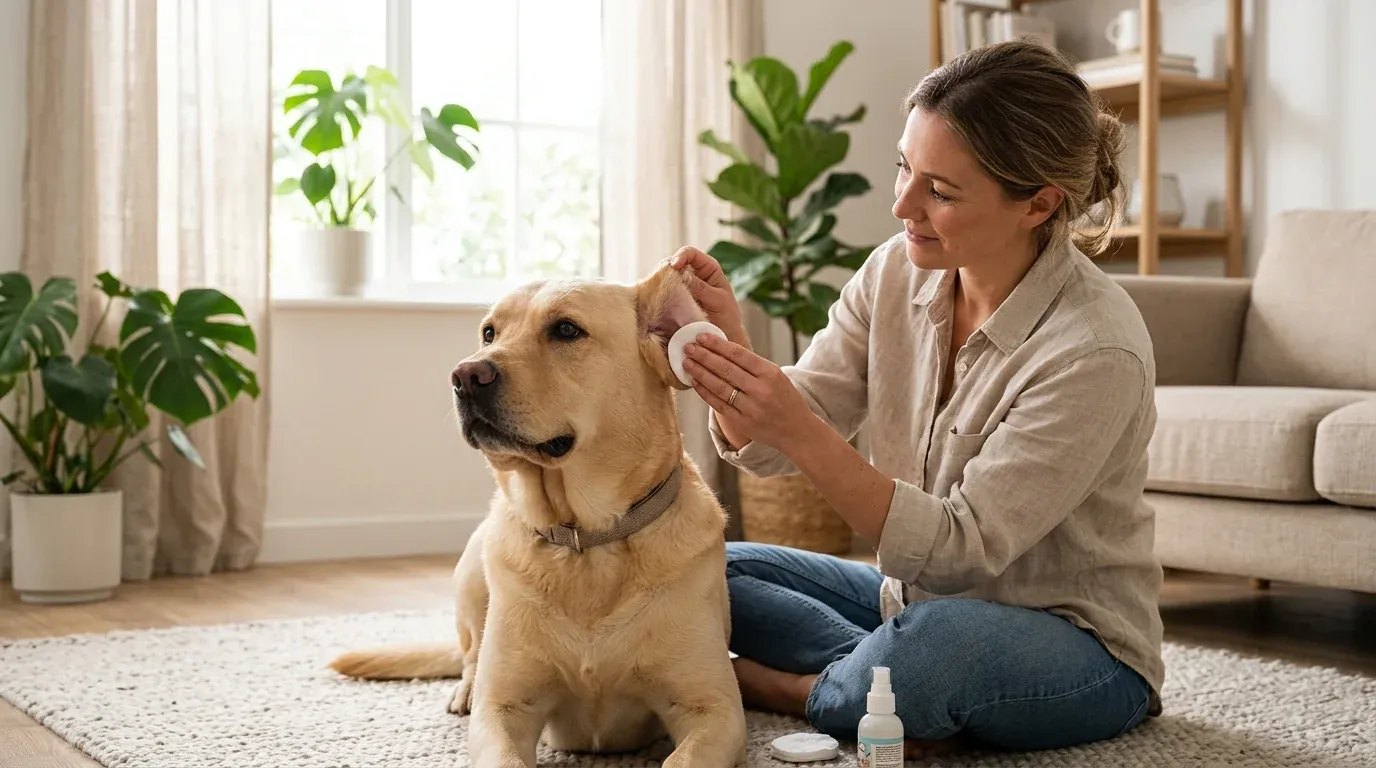
Helpful step: Wipe your dog’s paws with an unscented, hypoallergenic pet wipe or rinse them in lukewarm water immediately after walks.
2. Food allergies or dietary sensitivities
Adverse food reactions in dogs most frequently target the skin, particularly the paws, ears, and belly. Proteins such as chicken, beef, dairy, or soy are common triggers. Paw licking coupled with recurrent ear irritation often points toward dietary sensitivities.
Helpful step: If seasonal changes do not alleviate the itching, discuss an elimination diet trial or novel protein food with your veterinarian. You can also monitor their daily nutrition with our guide on why is my dog not eating if food changes impact appetite.
3. Foreign objects and physical injuries
Dogs explore the outdoors barefoot, exposing their paw pads to sharp thorns, burrs, glass shards, bee stings, and dangerous plant awns like foxtails. A foxtail can burrow beneath the skin and migrate upward through the tissue, causing severe swelling and pain.
Helpful step: Spread your dog’s toes under bright light and check the webbing. If you see an embedded splinter or puncture, let your vet extract it to prevent deep abscesses. Regular nail maintenance also prevents split nails; review our guide on how to trim dog nails at home to keep claws healthy.
4. Secondary yeast and bacterial infections
A dog’s skin naturally hosts low levels of Malassezia yeast and Staphylococcus bacteria. Chronic moisture from compulsive licking disrupts the skin barrier, allowing these organisms to multiply rapidly. Signs include a distinct musty odor, greasy discharge, and rusty red or brown fur staining caused by porphyrins in dog saliva.
Helpful step: Never use human antibacterial creams or hydrocortisone ointments without veterinary approval. Your vet may prescribe chlorhexidine and ketoconazole paw soaks or medicated wipes.
5. Boredom, stress, and separation anxiety
Licking releases endorphins that temporarily soothe anxious dogs. If a dog lacks mental stimulation, physical exercise, or struggles with separation distress, paw licking can evolve into an obsessive-compulsive habit (acral lick dermatitis).
Helpful step: Boost mental enrichment with lick mats, puzzle feeders, and structured play sessions. If anxiety triggers barking or distress when left alone, explore our techniques on how to stop dog barking.
6. Arthritic pain and joint discomfort
Senior dogs experiencing osteoarthritis in their wrists (carpals), elbows, or hips often lick the joints and radiating paw areas to relieve chronic aching. If only one leg or paw receives intense licking, joint stiffness or spinal nerve compression could be the primary culprit.
How to assess your dog’s paws at home
Before visiting your vet clinic, a calm, systematic home check gives you valuable information to share with your healthcare team.
| Inspection Area | Healthy Signs | Warning Signs |
|---|---|---|
| Paw Pads | Smooth, pliable, intact texture | Cracks, blisters, burns, embedded gravel |
| Interdigital Webbing | Pale pink, clean, dry skin | Deep redness, sores, pustules, brown fur |
| Nails & Quick | Intact, smooth, proper length | Cracked claws, swollen nail beds, bleeding |
| Odor | Neutral or mild puppy smell | Musty corn-chip smell, sweet fermented odor |
| Behavior | Relaxes during inspection | Pulls away, growls, whimpers, bites at feet |
Safe home remedies and preventive care
While serious medical conditions require prescription therapy, these supportive steps can bring gentle relief:
- Epsom salt or povidone-iodine paw dips: Soaking irritated paws in warm water with a splash of diluted povidone-iodine (diluted to the color of weak iced tea) for 3 to 5 minutes cleanses environmental allergens and cools inflamed skin.
- Booties or protective socks: High-traction breathable dog boots shield sensitive paws from hot asphalt during summer and corrosive de-icing salts during winter walks.
- Omega-3 fatty acid supplements: High-potency EPA and DHA fish oils support the dermal moisture barrier and calm systemic inflammatory pathways.
- Physical barriers during healing: Use a soft recovery cone or inflatable donut collar while medicated topical ointments absorb, stopping your dog from licking off treatment.
Ensuring your dog has enough space, mental calm, and routine goes a long way. For city dwellers, review our guide on best pets for apartments for tips on managing indoor pet wellness.
Frequently asked questions
Why do dog paws smell like corn chips?+
The corn chip or Fritos scent is caused by natural populations of Proteus bacteria and Malassezia yeast living on paw pads. While faint odors are normal, a strong, pungent smell combined with licking signals an active infection requiring veterinary treatment.
Can I put coconut oil on my dog's irritated paws?+
While coconut oil has mild moisturizing properties, dogs frequently lick it right off, adding unwanted dietary fat and calories without solving the underlying allergy. Medicated veterinary paw balms or soothing wipes are far more effective.
Can I use human hydrocortisone cream on my dog's paws?+
No. Human topical creams contain ingredients that are toxic when ingested. Because dogs immediately lick whatever is applied to their paws, use only veterinarian-formulated leave-on mousses or prescribed sprays.
Why does my dog only lick their paws at night?+
Nighttime licking is common because household distractions diminish, leaving your dog focused on body sensations. In addition, dogs with contact allergies accumulate grass and pollen allergens throughout daytime walks, peaking in itchiness by evening.
How do veterinarians treat chronic paw licking?+
Veterinarians perform skin cytologies to identify yeast or bacteria, followed by targeted medicated baths, oral antihistamines, Apoquel, or Cytopoint injections to interrupt the itch cycle while treating the root cause.
Sources & further reading
This article draws on guidance from these trusted organizations. Always consult your own veterinarian for advice specific to your pet.
Written by
Raghav DeedwaniyaFounder & Editor
Raghav Deedwaniya is the founder and editor of Petifys, and the author behind its pet care content. I’m a lifelong pet owner, not a veterinarian — I’ve been around dogs since childhood, and that hands-on experience is what got me into writing about responsible pet ownership. At Petifys I create practical, easy-to-understand guides, each one carefully researched using trusted sources such as the AVMA, ASPCA and International Cat Care. My aim is to help you make informed everyday decisions — but for anything involving your pet’s health, always consult a qualified veterinarian who can examine your animal in person.
Disclosure: Some links in this article are affiliate links. If you buy through them we may earn a small commission at no extra cost to you. We only recommend products we believe in. Learn more.