How to Stop Dog Barking: 6 Gentle Steps That Work
Tired of nuisance barking? Learn the root causes behind dog barking, what not to do, and 6 positive training techniques to restore peace at home.

On this page
- Why dogs bark: the 5 primary triggers
- 6 gentle steps to reduce excessive barking
- Step 1: Manage the visual environment
- Step 2: Desensitize to doorbell and hallway sounds
- Step 3: Teach a “Go to Place” cue
- Step 4: Stop rewarding demand barking
- Step 5: Increase mental and physical decompression
- Step 6: Teach the “Quiet” cue gently
Barking is natural canine communication, but excessive barking can quickly strain household sanity and neighborly relations. When your dog barks at delivery vans, neighbors in the hallway, or every rustling leaf, yelling “Quiet!” rarely works. In fact, to your dog, shouting simply sounds like you are enthusiastically barking along.
Learning how to stop dog barking begins by identifying the emotion driving the vocalization. Dogs do not bark to be spiteful — they bark out of alarm, boredom, loneliness, excitement, or learned attention-seeking habits.
The core principle
You cannot eliminate barking completely — dogs need to communicate. The goal is teaching your dog an alternative behavior that is physically incompatible with barking, such as going to a bed mat or grabbing a toy.
Why dogs bark: the 5 primary triggers
Before you can change the behavior, you must pinpoint what your dog is trying to say:
- Alert and territorial barking: Triggered by sights and sounds near your property line (mail carriers, passing dogs, car doors slamming). The dog feels responsible for guarding the perimeter.
- Boredom and frustration: Occurs when a dog has surplus physical energy or unmet mental stimulation. A dog left alone in a backyard all afternoon will bark at insects just to pass the time.
- Demand barking: High-pitched, direct barking aimed squarely at you when you are preparing dinner, sitting on the couch, or holding a tennis ball. The dog has learned that noise produces attention or treats.
- Fear and reactivity: Low-pitched or frantic barking directed at unfamiliar people, sudden noises, or other dogs on walks. This barking is designed to make the scary thing move farther away.
- Separation distress: Continuous barking, whining, and howling that begins within minutes of you leaving the house. If you are handling a young dog with isolation distress, see our guide on puppy crying when left alone.
6 gentle steps to reduce excessive barking
Here is a step-by-step, humane approach that addresses root causes without relying on shock collars, citronella sprays, or physical punishment.
Step 1: Manage the visual environment
The simplest way to stop alert barking at windows is preventing your dog from rehearsing the habit in the first place. Every time a dog barks out the window at a postal worker who subsequently walks away, the dog believes their barking successfully chased the intruder off.
- Apply frosted window film to the lower third of living room windows.
- Keep blinds drawn during delivery hours.
- Move sofas and armchairs away from window perches so your dog cannot patrol the street.
Step 2: Desensitize to doorbell and hallway sounds
Dogs quickly pair doorbells and knocking with high arousal. You can desensitize your dog using recorded sounds at low volumes:
- Search for doorbell and knocking sound effects on your phone.
- Play the sound at a whisper volume while tossing high-value treats to your dog on the floor.
- Over several days, gradually increase the volume as long as your dog remains relaxed and looks to you for a treat instead of racing toward the door.
- Pair this with gradual desensitization tools outlined in our puppy socialization checklist.
Step 3: Teach a “Go to Place” cue
Giving your dog an active task replaces the instinct to rush the entryway. Train a “Place” cue on a designated dog mat:
- Lure your dog onto the mat with a treat and say “Place.”
- Reward heavily while all four paws remain on the bed.
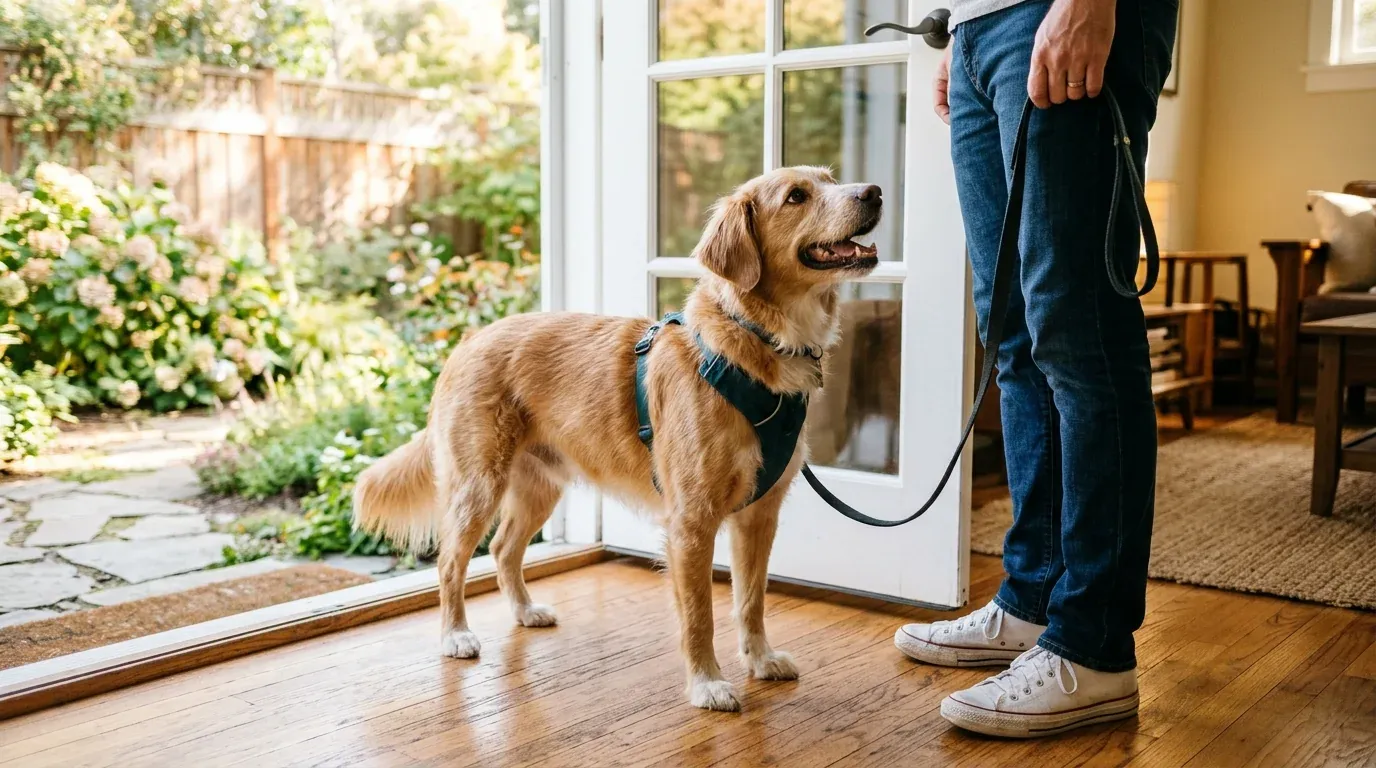
- Practice asking for “Place” when friends ring the doorbell, rewarding your dog for lying calmly while the door opens.
Step 4: Stop rewarding demand barking
If your dog barks at you while you prepare their meal or watch television, your reaction makes all the difference. Even turning your head, sighing, or saying “No” provides social feedback that reinforces demand barking.
The rule is simple: Noise equals zero attention. The instant your dog barks demanding food or play, turn your back, cross your arms, and look at the ceiling. When your dog offers three seconds of calm silence, turn around and reward the quiet. Consistency across every family member is critical.
Step 5: Increase mental and physical decompression
Many nuisance barking issues dissolve when dogs receive adequate physical exercise and scent-based mental work. Physical walks burn calories, but sniffing decompresses the nervous system.
- Incorporate 20-minute “sniffaris” where your dog chooses the walking pace and investigates scents.
- Replace open food bowls with puzzle toys, frozen LickiMats, or stuffed Kongs.
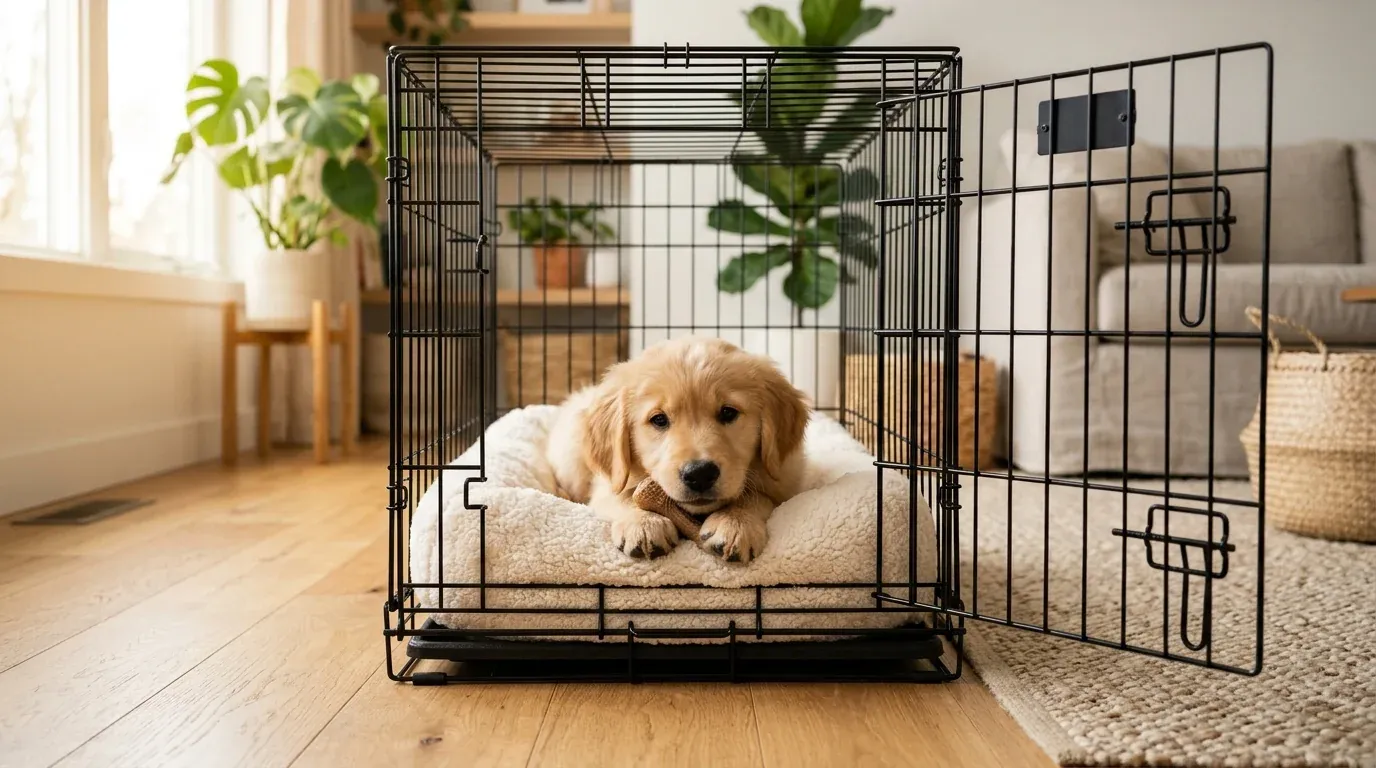
- For crate-trained dogs who bark during quiet hours, review proper crate settling steps in our guides on how to crate train a puppy and how to crate train a rescue dog.
Step 6: Teach the “Quiet” cue gently
Once you have managed triggers and reduced baseline arousal, introduce an explicit “Quiet” cue:
- When your dog barks at a trigger, allow two alert barks (acknowledging their natural watchdog instinct).
- Say “Quiet” in a calm, neutral tone.
- Hold a strongly scented treat (like freeze-dried liver or cheese) directly in front of your dog’s nose.
- A dog cannot bark while actively sniffing food. Once they stop barking to inhale the scent for three seconds, praise softly and deliver the treat.
- Over time, increase the duration of quiet required before releasing the reward.
| Barking Type | Root Cause | Best Intervention | What NOT to Do |
|---|---|---|---|
| Window/Door Alert | Guarding perimeter | Window film, sound masking | Shouting or tapping on glass |
| Demand / Begging | Seeking attention/food | Turn away; reward silence | Giving treats to shut them up |
| Boredom | Unspent energy | Sniff walks, puzzle feeders | Leaving isolated in backyard |
| Separation Panic | Isolation anxiety | Desensitization protocol | Punishing when returning home |
New pet owners often underestimate the training commitment required for vocal or energetic breeds. If you are preparing your home for a new canine companion, explore our complete first-time puppy owner guide for proactive tips.
Frequently asked questions
Do anti-bark collars actually work?+
Anti-bark shock or citronella collars can suppress barking temporarily through fear and discomfort, but they do not address the underlying emotion. In many cases, punishment collars cause redirected aggression, increased anxiety, and phobias. Reward-based training and trigger management deliver safer, long-term results.
Why does my dog bark at night for no reason?+
Dogs have far more acute hearing than humans. Night barking is usually triggered by nocturnal wildlife (raccoons, possums, neighborhood cats), heating units kicking on, or boredom. Using a white noise machine in the sleeping area masks minor outdoor noises effectively.
How long does it take to train a dog to stop barking?+
With consistent management and daily reinforcement, most dogs show measurable improvement within 2 to 3 weeks. Learned demand barking habits often peak during an 'extinction burst' (a few days where barking gets louder before disappearing) before fading.
Should I let my puppy bark it out in their crate?+
No. While brief demand complaining (30 to 60 seconds) can be waited out, letting a puppy panic and cry continuously creates deep negative associations with confinement. If distress continues, take them out on a leash for a boring potty break, then return them calmly to the crate.
When should I seek a certified veterinary behaviorist?+
If barking is accompanied by snarling, lunging, snapping, or severe panic (destructive clawing at exit doors during storms or departures), consult your veterinarian and a certified professional dog trainer (CPDT-KA) or veterinary behaviorist.
Sources & further reading
This article draws on guidance from these trusted organizations. Always consult your own veterinarian for advice specific to your pet.
Written by
Raghav DeedwaniyaFounder & Editor
Raghav Deedwaniya is the founder and editor of Petifys, and the author behind its pet care content. I’m a lifelong pet owner, not a veterinarian — I’ve been around dogs since childhood, and that hands-on experience is what got me into writing about responsible pet ownership. At Petifys I create practical, easy-to-understand guides, each one carefully researched using trusted sources such as the AVMA, ASPCA and International Cat Care. My aim is to help you make informed everyday decisions — but for anything involving your pet’s health, always consult a qualified veterinarian who can examine your animal in person.
Disclosure: Some links in this article are affiliate links. If you buy through them we may earn a small commission at no extra cost to you. We only recommend products we believe in. Learn more.