How to Trim Dog Nails at Home Without Fear or Pain
Learn how to trim dog nails safely at home. Step-by-step guidance on clippers vs grinders, finding the quick, handling dark nails, and keeping dogs calm.
On this page
- Anatomy of the canine nail
- Clippers vs rotary grinders: which is better?
- Pre-trim prep: the essential kit
- 5 steps to trimming dog nails safely
- Step 1: Desensitize paw handling first
- Step 2: Position your dog comfortably
- Step 3: Use a lick mat for distraction
- Step 4: Cut at a 45-degree angle
- Step 5: Don’t forget the dewclaws
- What to do if you cut the quick
Trimming your dog’s nails is one of the most common grooming tasks pet owners dread. Many dogs pull their paws away, squirm, or panic, and owners worry about cutting the quick and causing bleeding. Overgrown nails, however, are not just cosmetic — they alter your dog’s skeletal posture, strain tendons, and can curl painfully into sensitive paw pads.
As a pet owner who has navigated nervous nail sessions, I know that patience and gentle desensitization make all the difference. Learning how to trim dog nails at home safely transforms grooming from a stressful battle into a calm, cooperative routine.
The sound test
If you hear your dog’s nails clicking on hardwood or tile floors when they walk, their nails are too long. A properly trimmed nail should sit just above floor level when the paw bears weight.
Anatomy of the canine nail
Inside every dog claw is a bundle of blood vessels and nerve endings called the quick. Cutting into the quick causes sharp pain and heavy bleeding, which is why dogs develop a lasting fear of clippers after a single bad experience.
- On white or light nails: The quick is easily visible as a pink triangle running down the center of the nail. You simply cut a few millimeters in front of where the pink area ends.
- On dark or black nails: The quick cannot be seen from the outside. You must trim tiny slivers (1 to 2 millimeters at a time) and examine the cut surface after every clip. When you see a greyish, chalky center turn into a shiny black or dark dot, stop immediately — you are right next to the quick.
Clippers vs rotary grinders: which is better?
| Tool Type | Best For | Pros | Cons |
|---|---|---|---|
| Scissor Clippers | Large dogs, thick nails | Quick single cut; silent | Can crush nail if dull |
| Guillotine Clippers | Small to medium dogs | Easy blade replacement | Less control for thick claws |
| Rotary Grinders (Dremel) | Dark nails, skittish dogs | Smooth edges; no sharp cuts | Motor hum and vibration |
Many owners prefer rotary grinders because you gently file the nail layer by layer, virtually eliminating the risk of cutting the quick.
Pre-trim prep: the essential kit
Before bringing your dog into the grooming space, set up your supplies within arm’s reach:
- High-quality sharp pet clippers or a charged nail grinder.
- Styptic powder (such as Kwik Stop) or plain cornstarch to stop bleeding if you nick the quick.
- High-value treats (freeze-dried meat, peanut butter, or string cheese cut into tiny bites).
- Good lighting or a direct headlamp so you can inspect the cut surface clearly.
5 steps to trimming dog nails safely
Step 1: Desensitize paw handling first
Do not attempt to clip all four paws on day one if your dog dislikes paw touching. Spend a few days building trust:
- Touch your dog’s shoulder and feed a treat.
- Move your hand down to their wrist, feed a treat.
- Lift the paw for two seconds, reward, and release.
- Introduce clipper sights and sounds without cutting: touch the metal clippers to the paw, feed a treat, and pack up. Early gentle handling is a key milestone in our puppy socialization checklist.
Step 2: Position your dog comfortably
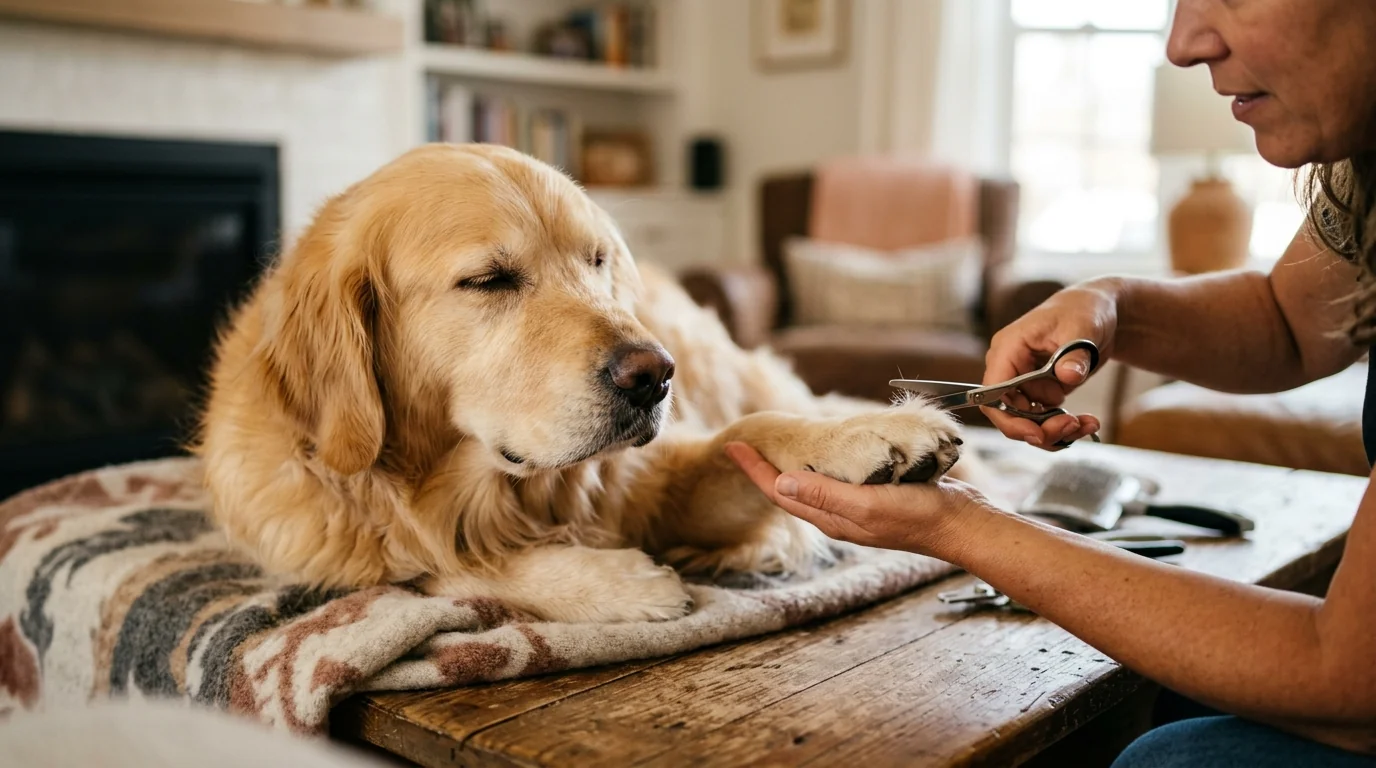
Small dogs can sit comfortably on a raised counter with a non-slip rubber bath mat. For larger dogs, have them lie on their side on a comfortable dog bed. Work with their natural body mechanics — gently bend the paw backward at the wrist rather than pulling the leg out to the side.
Step 3: Use a lick mat for distraction
Spread dog-safe peanut butter or wet food on a silicone suction lick mat mounted at nose height. Licking releases endorphins that reduce canine heart rate and naturally diverts attention away from paw manipulation. For energetic pups, keeping interactive toys around helps redirect nervous energy; see our favorite options in best chew toys for teething puppies.
Step 4: Cut at a 45-degree angle
Hold the clipper blade at a 45-degree angle following the natural curve of the nail. Avoid holding the clipper flat across the claw, which crushes the nail structure. Clip one thin slice at a time. If using a rotary grinder, touch the sander to the nail in short, 2-to-3-second bursts to prevent heat from building up on the claw.
Step 5: Don’t forget the dewclaws
Most dogs have dewclaws on the inside of their front paws (and some breeds on their rear paws). Because dewclaws do not touch the ground, they do not wear down naturally and can grow in a complete circle, piercing the leg pad if neglected. Check them during every grooming session.
What to do if you cut the quick
Even veterinary professionals occasionally nick a quick. If your dog flinches and bleeding starts:
- Stay completely calm. If you panic or apologize profusely, your dog feeds on your anxiety.
- Immediately press a pinch of styptic powder directly onto the tip of the bleeding claw and hold firm pressure with your thumb for 30 to 60 seconds.
- If you do not have styptic powder, pack plain cornstarch or baking flour firmly against the nail.
- Give your dog a handful of jackpot treats, end the session on a positive note, and give them 15 minutes of quiet rest to prevent blood from re-opening on rugs.
Regular nail upkeep prevents joint strain and keeps walks comfortable. If your dog enjoys outdoor adventures, pair good paw health with consistent walking manners from our guide on how to leash train a puppy.
For a broader overview of weekly grooming routines, coat maintenance, and puppy care, consult our comprehensive first-time puppy owner guide.
Frequently asked questions
How often should I trim my dog's nails?+
Most dogs require a nail trim every 3 to 4 weeks. Dogs who walk frequently on concrete sidewalks naturally file their front nails and may only need monthly trims, while indoor dogs or older dogs who walk mostly on grass or rugs may need maintenance every 2 weeks.
Can long nails cause health problems in dogs?+
Yes. When overgrown nails press against the floor, they push the toe bones upward into unnatural angles. Over months and years, this causes chronic arthritis in the toes and wrists, alters hip and spine alignment, and increases slipping hazards on hard surfaces.
How do I trim black dog nails without hitting the quick?+
Cut tiny 1-millimeter slivers at a 45-degree angle. Look directly at the center of the freshly cut nail surface after each clip. As soon as you see a chalky white ring develop a dark, shiny circle or dot in the center, stop cutting immediately.
What if my dog is terrified of nail clippers?+
Switch tools. If your dog has a fear history with clippers, switch to a silent rotary grinder or a scratch board (where your dog learns to scratch sand paper mounted on a wooden board for treats). Desensitize slowly over several weeks using high-value rewards.
Can I use human nail clippers on a dog?+
You can only use human nail clippers on tiny newborn puppies whose nails are paper-thin. Human clippers pinch and crush adult canine claws because dog nails are round and dense. Always use dedicated pet clippers designed to shear round nails smoothly.
Sources & further reading
This article draws on guidance from these trusted organizations. Always consult your own veterinarian for advice specific to your pet.
Written by
Raghav DeedwaniyaFounder & Editor
Raghav Deedwaniya is the founder and editor of Petifys, and the author behind its pet care content. I’m a lifelong pet owner, not a veterinarian — I’ve been around dogs since childhood, and that hands-on experience is what got me into writing about responsible pet ownership. At Petifys I create practical, easy-to-understand guides, each one carefully researched using trusted sources such as the AVMA, ASPCA and International Cat Care. My aim is to help you make informed everyday decisions — but for anything involving your pet’s health, always consult a qualified veterinarian who can examine your animal in person.
Disclosure: Some links in this article are affiliate links. If you buy through them we may earn a small commission at no extra cost to you. We only recommend products we believe in. Learn more.